

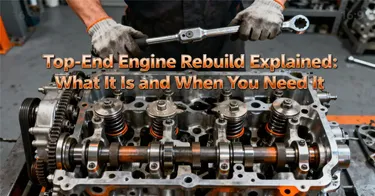
Top-End Engine Rebuild Explained: What It Is and When You Need It
For mechanics, fleet managers, and DIY enthusiasts, the term “top-end engine rebuild” often sparks questions: What exactly does it entail? How is it different from a full engine rebuild? And when is it necessary to invest in one? Unlike a complete engine overhaul (which addresses both top and bottom components), a top-end rebuild focuses on the upper half of the engine—components directly involved in airflow, combustion, and valve operation.
A well-executed top-end rebuild can restore lost power, fix leaks, and extend your engine’s life by 100,000+ miles—all at a fraction of the cost of a full rebuild or engine replacement. This guide breaks down the basics of a top-end rebuild, the components involved, signs your engine needs one, and key considerations for cost and timing. Whether you’re a repair shop owner sourcing parts or a DIYer planning a project, we’ll also highlight how Linkteco’s OEM-quality engine parts ensure a reliable rebuild.
What Is a Top-End Rebuild?
A top-end engine rebuild is a targeted repair that focuses on the “upper” components of an internal combustion engine—those above the crankshaft, typically housed in or attached to the cylinder head. It’s distinct from a “bottom-end rebuild” (which involves the crankshaft, connecting rods, and pistons) and a “full engine rebuild” (which combines both).
Core Purpose of a Top-End Rebuild
The top-end is responsible for three critical engine functions:
- Delivering air-fuel mixture to the cylinders (intake).
- Managing combustion (sealing the combustion chamber).
- Expelling exhaust gases (exhaust).
Over time, wear, heat, and debris degrade these components, leading to reduced efficiency, leaks, or misfires. A top-end rebuild replaces or refurbishes these parts to restore factory performance and prevent catastrophic engine failure.
Top-End vs. Bottom-End vs. Full Rebuild: Key Differences
To avoid confusion, here’s how the three rebuild types compare:
Rebuild Type | Focus Components | Common Reasons | Cost Range (Professional) |
|---|---|---|---|
Top-End | Cylinder head, valves, valve springs, camshaft, gaskets, intake/exhaust manifolds. | Power loss, oil leaks, misfires, overheating, valve train noise. | $1,500–$4,000 (varies by engine size) |
Bottom-End | Crankshaft, connecting rods, pistons, bearings, oil pan, crankshaft seals. | Knocking noises, low oil pressure, piston ring wear, crankshaft damage. | $2,500–$6,000 |
Full Engine Rebuild | All top-end + bottom-end components. | Severe engine damage (e.g., blown head gasket leading to crankshaft failure). | $4,000–$10,000+ |
A top-end rebuild is the most cost-effective option when issues are isolated to the upper engine—no need to tear down the entire engine if the bottom-end (crankshaft, pistons) is still in good shape.
Components Typically Replaced in a Top-End Rebuild
A top-end rebuild isn’t a one-size-fits-all process, but it usually includes replacing or reconditioning these key components. For reference, many of these parts are defined in our Automotive Engine Parts Glossary:
1. Cylinder Head
The cylinder head is the centerpiece of the top-end, housing the combustion chambers, valves, and camshaft. During a rebuild:
- Inspection: Check for warping (common after overheating) using a straightedge and feeler gauge—warpage beyond 0.003 inches requires resurfacing or replacement.
- Replacement/Refurbishment: If cracked (detected via pressure testing), a new cylinder head is necessary. Linkteco’s Cylinder Head Wholesale line offers OEM-compatible heads for 95% of vehicle models, with pre-resurfaced mating surfaces for a perfect seal.
2. Valves (Intake and Exhaust)
Valves control airflow into and out of the cylinders. Over time, they wear, corrode, or develop deposits:
- Intake valves: Collect carbon deposits from the air-fuel mixture, reducing airflow.
- Exhaust valves: Withstand extreme heat (up to 850°C), leading to warping or burning.
- Replacement: New valves (typically made of stainless steel or Inconel for exhaust valves) are installed, along with valve guides (to ensure proper alignment) and valve seats (to seal the combustion chamber).
3. Valve Train Components
The valve train includes parts that open and close the valves:
- Valve springs: Lose tension over time, causing valves to open/close improperly. Replaced with high-tensile springs to maintain pressure.
- Camshaft: Worn cam lobes (egg-shaped protrusions) reduce valve lift and duration. Linkteco’s camshafts are induction-hardened for durability, available in stock or performance profiles.
- Rocker arms/pushrods: Wear at pivot points causes noise or inconsistent valve operation. Replaced with hardened steel or aluminum components.
4. Gaskets and Seals
Gaskets are critical for sealing the top-end:
- Head gasket: The most important—prevents coolant/oil leaks between the cylinder head and block. Linkteco’s multi-layer steel (MLS) head gaskets withstand 1,200 psi pressure, reducing blowout risk.
- Intake/exhaust manifold gaskets: Seal the manifolds to the cylinder head, preventing air/fuel or exhaust leaks.
- Valve cover gasket: Prevents oil leaks from the valve train.
5. Intake and Exhaust Manifolds
- Intake manifold: May develop cracks or carbon buildup, reducing air-fuel flow. Refurbished (cleaned) or replaced with OEM-compatible manifolds (Linkteco’s plastic intake manifolds use glass-filled nylon for heat resistance).
- Exhaust manifold: Prone to rust or warping—replaced with stainless steel manifolds for corrosion resistance, especially in coastal regions.
6. Additional Components
- Timing chain/belt: Replaced if worn (critical for synchronizing the camshaft and crankshaft).
- Spark plugs (gasoline engines): New plugs ensure proper ignition after rebuild.
- Fuel injectors (direct injection engines): Cleaned or replaced to restore fuel delivery precision.
Signs Your Engine Needs a Top-End Rebuild
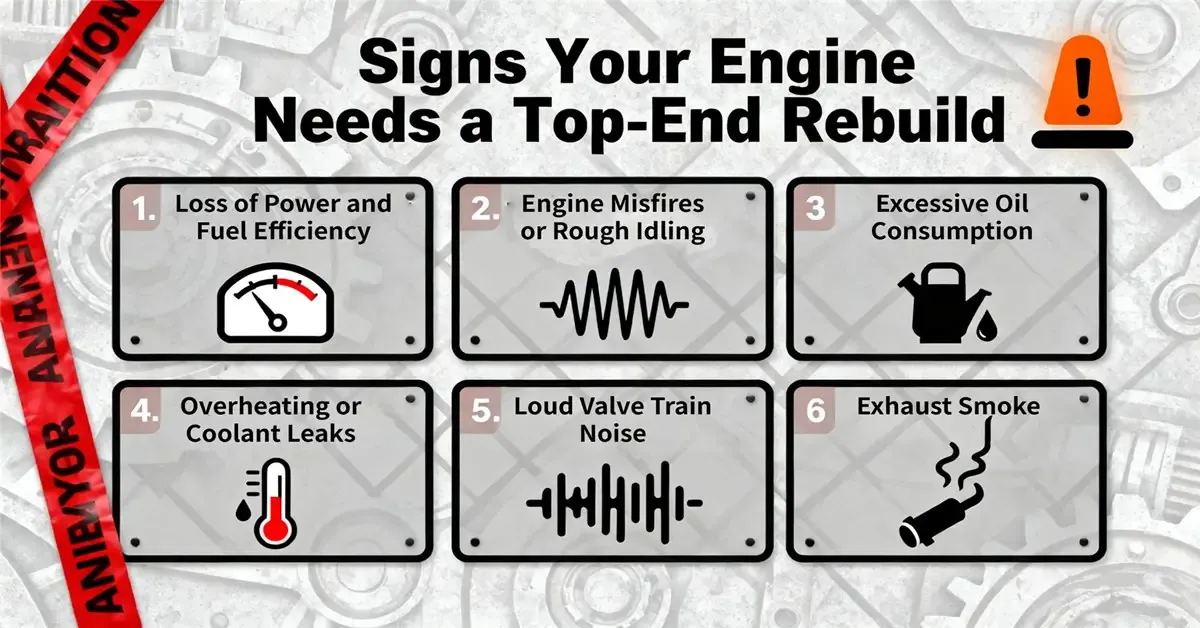
1. Loss of Power and Fuel Efficiency
- Symptoms: Sluggish acceleration, reduced top speed, or a 10–15% drop in fuel economy.
- Cause: Restricted airflow from carbon deposits on valves/intake manifold, worn cam lobes (reducing valve lift), or leaking intake manifold gaskets (uneven air-fuel mixture).
- Diagnosis: A compression test (low compression in one or more cylinders) or leak-down test (air escaping from the combustion chamber) confirms top-end issues.
2. Engine Misfires or Rough Idling
- Symptoms: The engine shakes at idle, hesitates when accelerating, or triggers a check engine light (codes P0300–P0308 for cylinder misfires).
- Cause: Worn valve seats (poor seal), damaged valve springs (inconsistent valve timing), or a faulty camshaft (uneven valve operation).
- Example: A diesel truck with a misfiring cylinder may have a worn exhaust valve that doesn’t seal properly, leading to incomplete combustion.
3. Excessive Oil Consumption
- Symptoms: Needing to add oil every 500–1,000 miles, blue smoke from the exhaust, or oil stains on the engine bay.
- Cause: Worn valve guides (oil seeps into the combustion chamber) or damaged valve stem seals (fail to prevent oil from entering cylinders).
- Note: This differs from bottom-end oil consumption (e.g., piston ring wear), which often causes more severe smoke and higher oil loss.
4. Overheating or Coolant Leaks
- Symptoms: Engine temperature gauge spiking, coolant puddles under the car, or milky oil (coolant mixing with oil).
- Cause: Blown head gasket, warped cylinder head, or cracked intake manifold (coolant leaks into the combustion chamber or oil galleries).
- Urgency: Address this immediately—overheating can warp the cylinder head further or damage the bottom-end.
5. Loud Valve Train Noise
- Symptoms: Ticking, tapping, or clattering sounds from the top of the engine (worse at idle or acceleration).
- Cause: Worn rocker arms, loose pushrods, weak valve springs, or a worn camshaft.
- Diagnosis: A mechanic can use a stethoscope to pinpoint the noise—loud ticking near the valve cover often indicates valve train wear.
6. Exhaust Smoke (Color-Coded Clues)
- Blue smoke: Oil burning (valve guide/seal wear).
- White smoke: Coolant burning (blown head gasket or cracked cylinder head).
- Black smoke: Rich air-fuel mixture (restricted intake or faulty camshaft timing).
Cost and Time Considerations (DIY vs Professional Shop)
The cost and time of a top-end rebuild depend on whether you DIY or hire a professional, plus the engine size and parts quality. Here’s a breakdown:
Professional Top-End Rebuild
Cost
- Small 4-cylinder engines (e.g., Honda Civic, Toyota Corolla): $1,500–$2,500 (parts + labor).
- V6 engines (e.g., Ford F-150, Chevrolet Silverado): $2,000–$3,500.
- V8 or diesel engines (e.g., Dodge Ram, Ford Power Stroke): $3,000–$4,000+.
Time
- 2–4 days (shop time) for most engines. Complex diesel or performance engines may take 5–7 days.
Pros
- Expertise: Mechanics use specialized tools (e.g., valve spring compressors, cylinder head resurfacers) and can detect hidden issues (e.g., a cracked camshaft).
- Warranty: Most shops offer 12–24 months on labor and parts (if using OEM-quality components like Linkteco’s).
Cons
- Higher cost: Labor accounts for 40–60% of the total (e.g., $800–$1,500 for a 4-cylinder rebuild).
DIY Top-End Rebuild
Cost
- $500–$1,500 (parts only). Saves 40–60% by avoiding labor fees.
- Key parts cost breakdown (Linkteco wholesale pricing):
- Cylinder head: $200–$600.
- Valve train kit (valves, springs, guides): $150–$300.
- Gasket set: $50–$150.
- Tools (if not already owned): $200–$500 (valve spring compressor, torque wrench, feeler gauges).
Time
- 1–3 weekends for experienced DIYers. First-timers should allocate 2–4 weeks (to avoid rushing).
Pros
- Significant cost savings.
- Control over parts quality: Choose OEM-compatible parts like Linkteco’s for reliability.
Cons
- Skill required: Improper torque (e.g., over-tightening head bolts) or misalignment (e.g., camshaft timing) can cause catastrophic damage.
- No labor warranty: Mistakes are your responsibility.
Key Tip for DIYers
Invest in a quality repair manual (e.g., Haynes or OEM guides linked below) and start with a small, simple engine (4-cylinder) if you’re new to rebuilds. Source a complete top-end rebuild kit from Linkteco to ensure all parts are compatible.
FAQ
1. Does a top-end rebuild add horsepower?
A top-end rebuild restores lost horsepower (typically 10–20%) but doesn’t inherently add more than the engine’s factory output—unless you upgrade components (e.g., performance camshafts, larger valves). For example:
- A stock Honda Civic with 140 HP may drop to 120 HP due to valve deposits and worn cam lobes. A rebuild restores it to 140 HP.
- Upgrading to Linkteco’s performance camshaft during the rebuild can boost it to 150–155 HP.
2. How long does a top-end rebuild last?
With proper parts and installation, a top-end rebuild can last 100,000–150,000 miles. Key factors affecting longevity:
- Parts quality: OEM-compatible parts (like Linkteco’s) last longer than cheap aftermarket components.
- Maintenance: Regular oil changes (every 5,000–7,500 miles) and avoiding overheating extend the rebuild’s life.
- Driving habits: Aggressive driving (high RPM, frequent cold starts) wears components faster.
3. Can I drive with a failing top-end, or is it urgent?
It’s not safe to drive with severe top-end issues (e.g., blown head gasket, cracked cylinder head)—overheating or oil loss can damage the bottom-end, turning a $2,000 rebuild into a $6,000 full engine replacement.
Mild issues (e.g., minor valve noise, slight power loss) can be driven temporarily (1–2 weeks) but should be addressed promptly to avoid worsening.
4. Is a top-end rebuild worth it, or should I replace the engine?
A top-end rebuild is worth it if:
- The bottom-end (crankshaft, pistons) is in good shape (no knocking, normal oil pressure).
- The engine has low total mileage (e.g., 100,000–150,000 miles) and no major cracks.
Replace the engine if:
- The cylinder block is cracked or warped.
- The bottom-end is damaged (e.g., seized crankshaft).
- The cost of a rebuild is within 70% of a replacement engine (e.g., a $3,500 rebuild vs. a $4,000 used engine).
5. Do I need to replace the timing chain/belt during a top-end rebuild?
Yes—even if it’s not worn. The timing chain/belt is accessible during the rebuild, and replacing it (cost: $100–$300) avoids future downtime (a broken timing belt can bend valves, requiring another rebuild).
Conclusion
A top-end engine rebuild is a smart investment to restore performance, fix leaks, and extend your engine’s life—without the cost of a full rebuild or replacement. Whether you’re a professional shop sourcing parts or a DIYer tackling a project, the key to success lies in using high-quality, OEM-compatible components that meet factory specs.
At Linkteco, we supply everything you need for a reliable top-end rebuild: cylinder heads, valve train kits, gaskets, and camshafts—all tested to IATF 16949 standards and compatible with 95%

Contact
©2026 LinkTeco All Rights Reserved.