

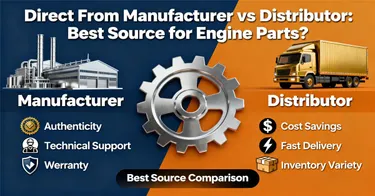
Direct From Manufacturer vs Distributor: Best Source for Engine Parts?
For wholesale buyers of engine parts—whether you’re a repair chain owner, fleet manager, or auto parts retailer—choosing between buying direct from the manufacturer (like Linkteco) or through a distributor is a decision that impacts your bottom line, inventory flexibility, and long-term supply chain stability.
Manufacturers produce parts from raw materials, while distributors act as middlemen, buying bulk parts from manufacturers and reselling them to smaller buyers. Both paths have distinct advantages: manufacturers offer lower costs and customization, while distributors provide flexibility and faster access to small batches.
This guide breaks down the key differences, helps you match your needs to the right source, and shares insights tailored to wholesale engine parts buyers—so you can make a decision that aligns with your order volume, budget, and business goals.
Buying Engine Parts Direct From Manufacturers
Buying direct means purchasing engine parts straight from the company that designs and produces them (e.g., ordering pistons or crankshafts directly from Linkteco, rather than through a third-party distributor). This model is ideal for buyers with consistent, large-volume needs.
Core Traits of Direct Manufacturer Sourcing
Advantages
- Lower Cost Per Unit
Manufacturers cut out the distributor’s markup (typically 15–30%), so you pay less for bulk orders. For example:
- A bulk order of 500 engine blocks might cost $1500/unit direct from Linkteco, vs. $1950/unit through a distributor—a 23% savings.
- Tiered pricing for larger volumes (e.g., 1,000+ units = an extra 10% off) further reduces costs, critical for wholesale buyers aiming to maximize margins.
- Customization Capabilities
Manufacturers can tailor parts to your specific needs—something distributors rarely offer. For instance:
- Linkteco can produce piston kits with custom bore sizes for modified racing engines or corrosion-resistant exhaust manifolds for coastal fleet vehicles.
- You can also request custom packaging (e.g., branding your shop’s logo on oil filter boxes) to enhance client loyalty.
- Full Quality Control
When buying direct, you have visibility into the manufacturing process. Reputable manufacturers like Linkteco provide:
- Certifications (IATF 16949, ISO 9001) to verify quality standards.
- Access to test reports (e.g., pressure testing for head gaskets, fatigue testing for crankshafts).
- Consistent part quality—no “mixed batches” of varying standards (a common issue with distributors who source from multiple manufacturers).
- Long-Term Partnership Benefits
Manufacturers prioritize long-term wholesale clients with perks like:
- Dedicated account managers (e.g., Linkteco assigns a 10+ year industry expert to handle bulk orders).
- Priority production during supply chain shortages (e.g., getting first access to pistons during a steel shortage).
- Extended warranties (e.g., 24–36 months for direct buyers, vs. 12 months through distributors).
Disadvantages
Higher Minimum Order Quantities (MOQs)
Manufacturers require larger batch sizes to justify production runs—common MOQs for engine parts are 50–500 units per part. For example, Linkteco’s MOQ for crankshafts is 50 units, which may be too large for small repair shops ordering 10–20 units at a time.
Longer Lead Times
Production and shipping take longer, direct from manufacturers (7–30 days, vs. 1–5 days through distributors). If you need emergency parts (e.g., replacing a faulty water pump for a fleet), direct sourcing may cause downtime.
Logistics Responsibility
For global buyers, direct sourcing means managing international shipping, customs clearance, and import duties—tasks distributors often handle. Manufacturers like Linkteco offer optional logistics support, but it may add to lead times.
Buying Engine Parts Through Distributors
Distributors are middlemen who purchase large quantities of engine parts from manufacturers, store them in local warehouses, and resell them to buyers in smaller batches. They’re ideal for buyers who need flexibility, speed, or access to multiple brands.
Core Traits of Distributor Sourcing
Advantages
- Low MOQs and Flexible Order Sizes
Distributors cater to small-to-medium wholesale buyers, with MOQs as low as 5–10 units. For example:
- A small repair shop needing 15 oil pans can order directly from a distributor, instead of meeting a manufacturer’s 50-unit MOQ.
- You can also mix parts in a single order (e.g., 10 pistons + 20 gaskets + 5 water pumps), simplifying inventory replenishment.
- Fast Shipping and Local Access
Distributors maintain regional warehouses (e.g., a U.S.-based distributor with facilities in California and Texas), so orders ship in 1–5 days. This is critical for:
- Emergency repairs (e.g., a fleet truck breaking down and needing a new alternator within 48 hours).
- Buyers who want to avoid international shipping delays or customs issues.
- One-Stop Shopping for Multiple Brands
Distributors source parts from dozens of manufacturers, so you can order OEM and aftermarket parts from a single supplier. For example:
- A retailer can buy Toyota OEM head gaskets and Linkteco aftermarket pistons from the same distributor, reducing administrative work (one invoice, one delivery).
- Simplified After-Sales Support
Distributors handle returns, warranties, and troubleshooting on your behalf. If a batch of gaskets is defective:
- You return them to the local distributor (no international shipping) and get replacements within days.
- Distributors also provide technical support (e.g., helping you confirm if a part fits a specific vehicle model), saving you time.
Disadvantages
Higher Cost Per Unit
Distributors mark up parts to cover their warehouse, labor, and logistics costs—you’ll pay 15–30% more than buying direct. For a bulk order of 500 pistons, this could add $15,000+ to your total cost.
Limited Customization
Distributors sell pre-made parts from their inventory—they can’t request customizations (e.g., modified piston skirts or branded packaging) from manufacturers. If you need tailored parts, distributors are not an option.
Inconsistent Quality
Some distributors source parts from low-quality manufacturers to cut costs. You may receive batches with:
- Subpar materials (e.g., aluminum pistons instead of forged steel).
- Poor craftsmanship (e.g., uneven gasket surfaces that cause leaks).
- No clear certification (e.g., missing IATF 16949 documentation).
- Dependence on Distributor Inventory
If a distributor runs out of a critical part (e.g., cylinder heads), you’ll have to wait for them to reorder from the manufacturer—adding delays you wouldn’t face with direct sourcing.
Key Differences in Cost, Availability, and Warranty (with table)
For wholesale buyers, the choice between manufacturer and distributor often comes down to 8 critical factors. Below’s a side-by-side comparison to simplify your decision:
| Factor | Direct From Manufacturer (e.g., Linkteco) | Through Distributor |
|---|---|---|
| Cost Per Unit | 15–30% lower (no distributor markup); tiered discounts for large volumes. | 15–30% higher (includes distributor’s warehouse/labor costs); minimal bulk discounts. |
| Minimum Order Quantity (MOQ) | 50–500 units per part (varies by part type). | 5–10 units per part; mixed orders allowed. |
| Lead Time | 7–30 days (production + shipping); longer for custom parts. | 1–5 days (local warehouse shipping); emergency same-day delivery available. |
| Customization | Full support (custom materials, sizes, packaging, branding). | None—only pre-made parts from inventory. |
| Quality Control | Full visibility (certifications, test reports, consistent batches). | Variable—may mix parts from low-quality manufacturers; limited certification access. |
| Warranty | 24–36 months (extended for direct buyers); manufacturer handles claims directly. | 12–24 months (shorter than direct); distributor acts as middleman for claims. |
| Logistics | Buyer manages international shipping/customs (optional manufacturer support). | Distributor handles all logistics (local delivery, returns, customs for imported parts). |
| Variety | Focused on core engine parts (e.g., pistons, crankshafts, gaskets) from one brand. | Wide (OEM + aftermarket, engine + non-engine parts) from multiple brands. |
Which Option Is Better for Wholesale Buyers?
There’s no “one-size-fits-all” answer—your choice depends on order volume, customization needs, speed requirements, and budget. Below are the most common scenarios and recommendations:
Choose Direct From Manufacturer If:
- You place large, consistent orders: If you need 50+ units of a single part (e.g., 200 oil filters monthly for a fleet), direct sourcing saves 15–30% annually.
- You need custom parts: For modified engines (e.g., racing pistons) or branded packaging, manufacturers like Linkteco are the only viable option.
- You prioritize long-term cost stability: Direct partnerships lock in pricing for 1–2 years, protecting you from distributor price hikes.
- You want full quality control: If you supply luxury repair shops or government fleets, direct sourcing ensures parts meet strict standards (no “surprise” defects).
Choose Through Distributor If:
- You need small or mixed orders: If you order 5–20 units of multiple parts (e.g., 10 gaskets + 15 water pumps), distributors avoid high MOQs and simplify invoicing.
- Speed is critical: For emergency repairs (e.g., a truck fleet breaking down), local distributors offer 1–2 day delivery—faster than manufacturers.
- You need non-engine parts too: If you also sell brakes, tires, or batteries, distributors let you order all parts from one supplier (reducing administrative work).
- You’re testing a new market: If you want to sell a new part (e.g., hybrid engine components) without committing to 50+ units, distributors let you order 10–15 units to test demand.
Hybrid Strategy: The Best of Both Worlds
Many successful wholesale buyers use a mix:
- Core parts direct from manufacturer: Order high-volume, critical parts (e.g., pistons, crankshafts) direct from Linkteco to save costs.
- Non-core/emergency parts through distributor: Use a distributor for small batches (e.g., 10 valve covers) or last-minute orders (e.g., a faulty thermostat).
This strategy balances cost savings, flexibility, and speed—ideal for growing wholesale businesses.
FAQ
1. Do distributors sell OEM engine parts, or only aftermarket?
Most distributors sell both OEM and aftermarket parts. They source OEM parts from authorized manufacturer partners (e.g., a distributor may buy Toyota OEM gaskets directly from Toyota, then resells them) and aftermarket parts from companies like Linkteco.
However, verify the distributor’s OEM authorization—some sell “OEM-like” parts that don’t meet true OEM standards. Ask for OEM part numbers and certification documents to avoid counterfeits.
2. Are manufacturers always cheaper than distributors for bulk orders?
Yes—manufacturers are almost always cheaper for bulk orders (50+ units). The distributor’s markup (15–30%) disappears when you buy direct, and manufacturers offer tiered discounts for larger volumes.
For example:
- 500 crankshafts direct from Linkteco: $120/unit ($60,000 total).
- 500 crankshafts through a distributor: $156/unit ($78,000 total).
- Savings: $18,000 (30%) for the same order.
3. Do manufacturers offer the same after-sales support as distributors?
Reputable manufacturers (like Linkteco) offer better after-sales support for direct buyers:
- Dedicated account managers (not general customer service reps) handle claims.
- Faster replacement of defective parts (no distributor middleman delaying the process).
- Extended warranties (24–36 months vs. 12–24 months through distributors).
The only exception is local returns—distributors let you drop off defective parts at a nearby warehouse, while manufacturers may require shipping parts back (though many, like Linkteco, cover return shipping costs).
4. Can small wholesale buyers (e.g., 10–20 units monthly) work directly with manufacturers?
It depends on the manufacturer’s MOQs. Many manufacturers (including Linkteco) have flexible MOQs for long-term small buyers—for example, if you commit to 10 units of pistons monthly for 12 months, Linkteco may waive the standard 50-unit MOQ.
For one-time small orders, distributors are still the better choice—but long-term small buyers can often negotiate direct terms with manufacturers.
Conclusion
Choosing between direct manufacturer and distributor sourcing comes down to aligning your supplier with your business needs: direct for large, custom, cost-sensitive orders; distributors for small, fast, mixed orders.
At Linkteco, we support both models:
- Direct buyers: Enjoy 15–30% lower costs, custom parts, extended warranties, and dedicated account managers. Our MOQs start at 50 units, with flexible terms for long-term small buyers.
- Distributor partners: We supply trusted distributors globally with high-quality aftermarket engine parts (pistons, crankshafts, gaskets) at competitive bulk rates—so they can serve their small-to-medium buyers effectively.
Ready to decide?
- For large/custom orders: Visit our Linkteco Homepage to browse core engine parts and request a direct quote.
- For small/emergency orders: Contact our team via the Contact Page for a list of authorized distributors in your region.
- Need help choosing? Our sourcing experts will analyze your order volume, speed needs, and budget to recommend the best path—just share your requirements, and we’ll respond within 24 hours.
Whether you buy direct or through a distributor, Linkteco ensures you get reliable, OEM-quality engine parts that keep your business running smoothly.

Contact
©2026 LinkTeco All Rights Reserved.