

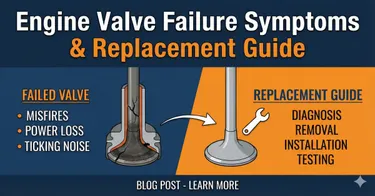
Engine Valve Failure Symptoms & Replacement Guide
What Engine Valves Do
To understand valve failure, you first need to grasp its core role in the four-stroke engine cycle. Most engines use two valves per cylinder, each with a distinct job: intake valves draw in the air-fuel mixture, while exhaust valves expel burned gases. They operate in perfect sync with the camshaft, piston, and timing system to ensure efficient combustion—any misalignment or wear disrupts this entire process.Valve Operation in the Four-Stroke Cycle:Intake Stroke: The camshaft pushes the intake valve open as the piston moves downward, creating a vacuum that pulls the air-fuel mixture into the cylinder.
Compression Stroke: Both valves close tightly to seal the cylinder, allowing the piston to compress the air-fuel mixture—this tight seal is critical for powerful, efficient combustion.
Power Stroke: After the spark plug ignites the compressed mixture, expanding gases push the piston downward. Valves remain closed to maximize the force transferred to the crankshaft.
Exhaust Stroke: The camshaft opens the exhaust valve as the piston moves upward, pushing burned exhaust gases out of the cylinder to make room for the next cycle.
Valve Seats: Metal rings embedded in the cylinder head that form a tight seal with the valve’s “face.” They prevent air-fuel mixture or exhaust gases from leaking, which would reduce compression.
Valve Guides: Cylindrical sleeves that keep the valve aligned as it opens and closes. They reduce wobble, minimize wear on the valve stem, and prevent oil from entering the combustion chamber.
Valve Springs: Coiled springs that push the valve closed immediately after the camshaft releases it. They ensure timely closing even at high engine RPM (up to 7,000+ RPM in performance engines).
Early Valve Failure Warning Signs
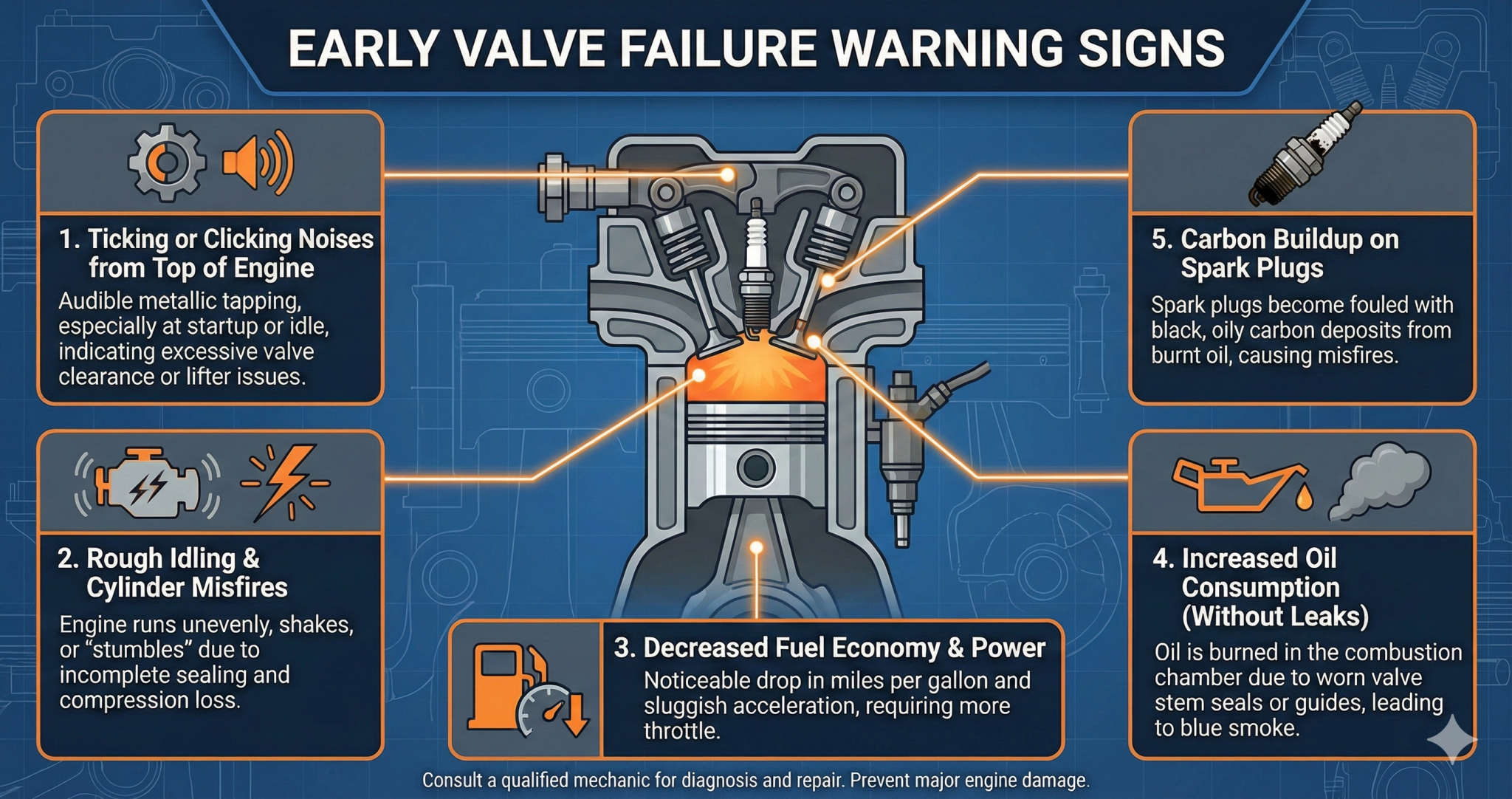
1. Ticking or Clicking Noises from the Top of the Engine
A rhythmic “tick-tick-tick” (louder at idle, fades at high RPM) is the most recognizable early clue. This stems from two common issues:Valve Lash Imbalance: Lash (the gap between the valve stem and rocker arm) wears over time. Too much lash causes sharp clicking; too little creates a softer tick (valve doesn’t close fully).
Worn Hydraulic Lifters: Lifters that maintain proper lash lose oil pressure, creating gaps that produce ticking.
2. Rough Idling & Cylinder Misfires
Valves that don’t seal or open properly disrupt combustion, causing misfires (one or more cylinders fail to ignite fuel consistently). Key signs:Engine shakes/vibrates at stoplights (worsens with AC running).
Check Engine Light (CEL) with codes P0300–P0308 (cylinder misfire detected).
Sputtering or hesitation when accelerating from a stop.
3. Decreased Fuel Economy & Power
Leaking or sticking valves reduce compression and disrupt airflow, forcing the engine to work harder. You’ll notice tangible performance drops:10–15% MPG decrease (e.g., 25 MPG → 21 MPG in a compact car).
Sluggish acceleration (delayed response when merging onto highways).
Reduced towing capacity (trucks/SUVs struggle with heavy loads).
4. Increased Oil Consumption (Without Leaks)
Worn valve stem seals (rubber rings that block oil from entering the combustion chamber) let oil seep into the cylinder, where it burns. This differs from piston-related oil burning:Blue smoke only on startup (oil pools in the cylinder while the engine sits).
Slow oil loss (1 quart every 1,500–2,000 miles) vs. rapid loss (piston issues).
5. Carbon Buildup on Spark Plugs
Leaking valves let unburned fuel and oil accumulate on spark plugs, creating distinct deposits (normal plugs have a tan/gray coating). Remove and inspect plugs to identify the issue:Black, wet deposits: Oil seepage from worn valve seals.
Black, dry deposits: Unburned fuel from leaking intake valves.
Severe Valve Damage Indicators
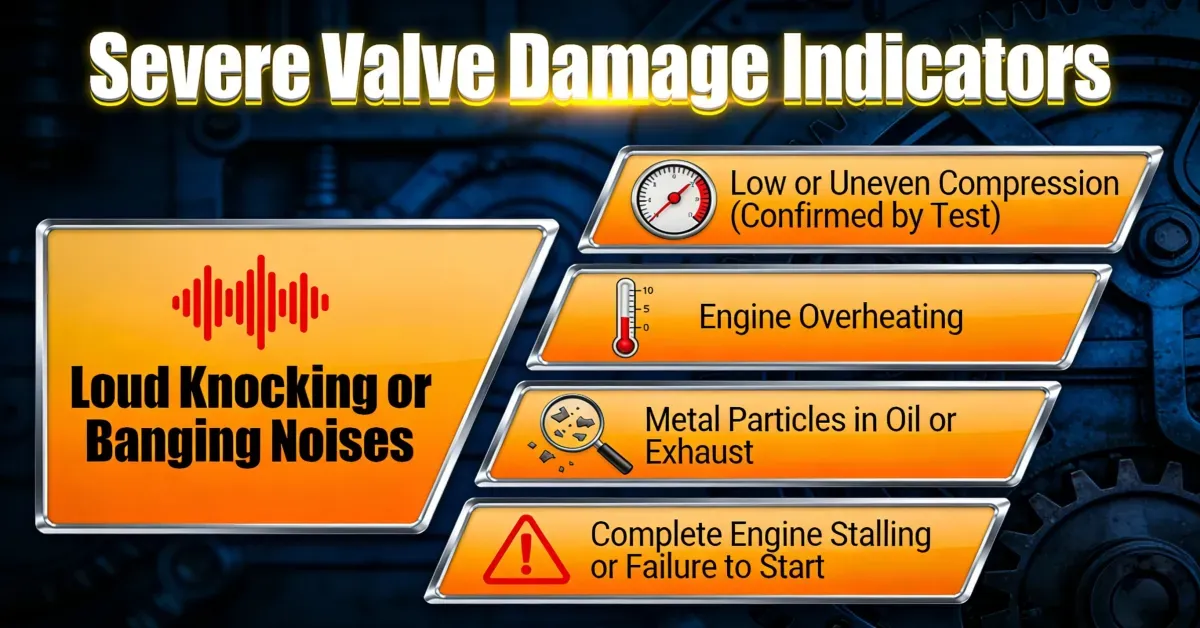
1. Loud Knocking or Banging Noises
A sharp, metallic “bang” (distinct from piston knock) signals a bent or broken valve. Two common causes:Timing Belt/Chain Failure: The camshaft stops syncing with the piston, so the piston slams into an open valve—bending or breaking it.
Valve Overheating: Extreme heat (from a lean fuel mixture) warps the valve, causing it to stick open and collide with the piston.
2. Low or Uneven Compression (Confirmed by Test)
A compression test is the most reliable way to diagnose severe valve damage. For gasoline engines, use these benchmarks (test with a warm engine):Normal: 120–190 psi per cylinder, ≤15 psi difference between cylinders.
Valve Issues: Low compression in 1–2 adjacent cylinders (leaking between valves) or consistent low pressure across all cylinders (worn valve seats).
3. Engine Overheating
Stuck or leaking valves trap heat in the cylinder by disrupting exhaust flow. Warning signs:The temperature gauge climbs above 220°F (104°C) during normal driving.
Steam from the radiator or a sweet coolant smell (overheating can crack the cylinder head).
4. Metal Particles in Oil or Exhaust
Broken valves or worn guides shed metal shavings that contaminate oil or exit through the exhaust. Inspect for:Oil Contamination: Gritty oil or silver flecks on the dipstick (valve metal is softer than piston metal, so particles are finer).
Exhaust Debris: Metal fragments in the tailpipe (sign of a broken valve head).
5. Complete Engine Stalling or Failure to Start
Severely damaged valves prevent the engine from building compression, leading to stalling or no-start issues. Common scenarios:Valve Stuck Closed: No air-fuel mixture enters the cylinder—engine turns over but won’t start.
Valve Stuck Open: Compression leaks out—engine cranks slowly and dies immediately.
Repair vs Replacement: What’s Worth It?
The choice between repairing and replacing valves depends on damage severity, engine age, and cost. Below is a practical breakdown based on Haynes repair guidelines and industry standards—use it to match your situation to the right solution:Damage Type | Repair Solution | Replacement Solution | Pro Cost Range | Best For |
|---|---|---|---|---|
Valve Lash Issues | Adjust the lash (mechanical valves) or replace the hydraulic lifters | Not needed | $150–$350 | Early ticking, no valve wear |
Worn Valve Seals/Guides | Replace seals/guides (valve head/seat undamaged) | Not needed | $400–$800 | Oil consumption, blue smoke on startup |
Minor Valve Seat Wear | Valve job (grind valve face + resurface seat) | Not needed | $800–$1,500 | Low compression (100–120 psi), mild misfires |
Bent/Cracked Valve | Not feasible (structural damage) | Replace valve + valve job + camshaft inspection | $1,200–$2,500 | Knocking noise, severe misfires |
Worn Valves + Damaged Head | Not feasible (head warping/cracks) | Replace valves + resurface/replace cylinder head | $2,000–$4,500 | Overheating, metal in oil |
Multiple Valve Failure (4+) | Not cost-effective | Top-end rebuild (all valves, guides, seats) | $2,500–$5,000 | High-mileage engines (150k+ miles) |
FAQ
Q1: Can I drive with a failing valve to reach a repair shop?
It depends on the symptom—safety and cost are the key factors:Yes (Short Distance Only): Mild ticking or slight oil consumption—drive 10–15 miles to a shop, but avoid high RPM and heavy loads.
No (Tow Immediately): Knocking noises, overheating, or metal in oil. Continuing to drive will bend the piston or crack the cylinder head, adding $1,000+ to repairs.
Q2: How often should valves be replaced?
Valves don’t have a set replacement schedule—they last until wear or damage occurs. With proper maintenance (regular oil changes, correct fuel grade), they typically last:Passenger Cars: 150,000–250,000 miles (aluminum alloy valves).
Diesel/Trucks: 200,000–300,000 miles (forged steel valves).
Q3: Is valve replacement a DIY job?
Only for advanced DIYers with specialized tools (valve spring compressor, valve grinder, torque wrench) and experience with cylinder head work. Key challenges:Removing the cylinder head without damaging the gasket.
Setting proper valve lash (varies by engine—incorrect lash causes repeat failure).
Resurfacing valve seats (requires precision grinding).
Q4: Do aftermarket valves work as well as OEM?
Not all—cheap aftermarket valves often use low-grade metal (prone to warping) or inconsistent machining (poor sealing). Linkteco’s valves are OEM-compatible, made from heat-resistant stainless steel, and tested to meet SAE standards. They’re a reliable alternative to expensive OEM parts for daily drivers and fleet vehicles.Q5: Will a valve adjustment fix low compression?
Only if low compression is caused by incorrect lash (valves not closing fully). If compression is low due to worn seats, bent valves, or damaged guides, an adjustment won’t help. Always run a compression test first to confirm the root cause.Conclusion
Engine valve failure is a progressive issue—catching early signs like ticking, misfires, or reduced fuel economy can turn a $300 adjustment into a $5,000 engine rebuild. The key to success is accurate diagnosis (use compression tests to confirm valve issues) and choosing the right solution: minor problems need repairs, while bent or cracked valves demand replacement. At Linkteco, we make valve repair and replacement simple and affordable for both professionals and DIYers:Complete Valve Kits: Include valves, valve seals, guides, springs, and retainers—no need to source parts from multiple suppliers. Available for 95% of passenger cars, trucks, and commercial vehicles.
OEM-Quality Durability: Our valves are made from stainless steel and heat-treated to withstand 1,400°F+ temperatures, matching factory performance. They’re tested for leak resistance and wear to ensure long life.
Expert Support: Our ASE-certified team can help you diagnose valve issues over the phone, match parts to your engine (using VIN or engine code), and provide step-by-step repair guides (based on Haynes standards).

Contact
©2026 LinkTeco All Rights Reserved.