

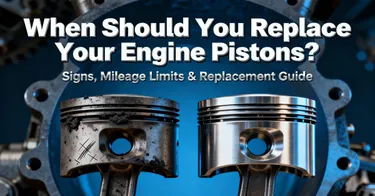
When Should You Replace Your Engine Pistons?
What Pistons Do Inside the Engine
Before identifying when to replace pistons, it’s vital to understand their role in keeping your engine running. Pistons are cylindrical components that fit tightly inside the engine’s cylinders, working in tandem with piston rings, connecting rods, and the crankshaft to power the four-stroke cycle:Intake Stroke: The piston moves downward, creating a vacuum that draws the air-fuel mixture into the cylinder through the intake valve.
Compression Stroke: The piston moves upward, compressing the air-fuel mixture to a fraction of its original volume (critical for efficient combustion—compression ratios range from 8:1 for gasoline engines to 22:1 for diesels).
Power Stroke: The spark plug ignites the compressed mixture, creating an explosion that pushes the piston downward with immense force. This movement turns the connecting rod, which spins the crankshaft and drives the wheels.
Exhaust Stroke: The piston moves upward again, pushing exhaust gases out through the exhaust valve.
Early Warning Signs of Piston Wear
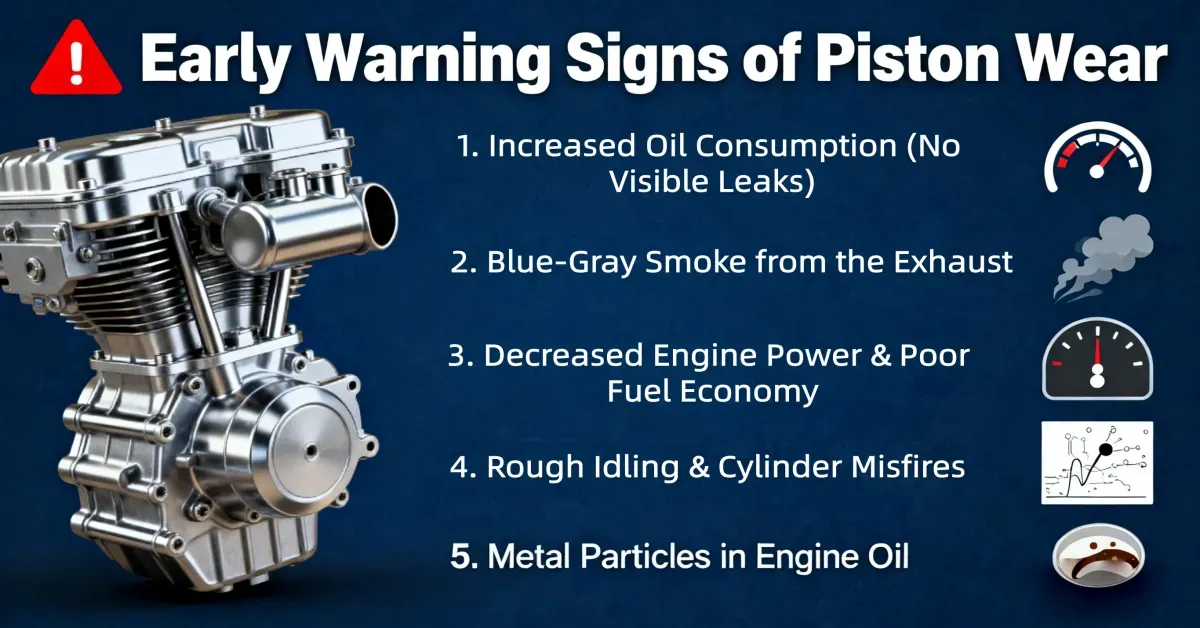
1. Increased Oil Consumption (No Visible Leaks)
Burning oil (rather than leaking it) is the most telltale early sign of piston-related issues. When piston rings wear thin or the piston skirt develops excessive clearance, the seal between the piston and cylinder wall breaks. This allows oil from the crankcase to seep upward into the combustion chamber, where it burns alongside fuel.Key Threshold to Watch For: Passenger cars: Burning more than 1 quart of oil every 1,000 miles (1.6L per 1,600 km) indicates piston wear.Diesel trucks/heavy-duty vehicles: Exceeding 1 quart per 500 miles (1.6L per 800 km) signals a problem—diesels naturally use more oil, but this is well beyond normal limits. To rule out leaks: Check the oil pan gasket, valve cover seals, and oil cooler lines for wetness. If the undercarriage stays dry but oil levels drop, piston wear is the likely cause.2. Blue-Gray Smoke from the Exhaust
Oil burning in the combustion chamber produces distinct blue-gray exhaust smoke—this is different from other smoke types and directly links to piston or ring issues:Black smoke: Rich fuel mixture (unrelated to pistons).
White smoke (thin, dissipates fast): Normal condensation (disappears after 1–2 minutes of driving).
White smoke (thick, sweet smell): Coolant leak (head gasket issue, not pistons).
Blue-gray smoke: Burning oil—most noticeable when accelerating hard or starting the engine after sitting overnight (oil pools in the combustion chamber while parked).
3. Decreased Engine Power & Poor Fuel Economy
Worn pistons or rings reduce compression in the combustion chamber. Lower compression means less force is generated during the power stroke, leading to tangible performance drops. Common signs include:Sluggish acceleration: The engine feels “tired” when merging onto highways or passing—it struggles to reach and maintain high RPM.
Fuel economy decline: A 10–20% drop in MPG (miles per gallon) is typical. The engine burns more fuel to compensate for lost power, wasting money at the pump.
Towing/hauling weakness: Trucks or SUVs that once handled heavy loads easily now bog down, even on gentle inclines.
4. Rough Idling & Cylinder Misfires
Low compression from worn pistons prevents one or more cylinders from igniting the air-fuel mixture consistently—a problem known as misfiring. Misfires manifest in several ways, and it’s important to rule out simpler issues first:Rough idling: The engine shakes, vibrates, or “bucks” at stoplights—you may feel the vibration through the steering wheel or seat.
Check Engine Light (CEL): The light will illuminate with specific misfire codes: P0300 (random misfires) or P0301–P0308 (misfire in cylinder 1–8).
Sputtering at low RPM: The engine stumbles when pulling away from stops or cruising at 20–30 mph.
5. Metal Particles in Engine Oil
As pistons wear, tiny metal shavings (aluminum for standard pistons, steel for forged ones) flake off and mix with the engine oil. These particles are a clear sign of internal wear, and you can detect them with three simple checks:Dipstick Inspection: Wipe the dipstick on a clean white rag. If the oil looks gritty, has a metallic sheen, or leaves silver/grey specks on the rag, piston wear is occurring.
Oil Drain Plug Check: Most drain plugs have a built-in magnet to catch metal debris. When changing oil, inspect the plug—if it’s coated in fine metal dust (not just a few specs), the piston is wearing down.
Professional Oil Analysis: Send a 4-ounce oil sample to a lab like Blackstone Laboratories. A spike in aluminum content (above 50 ppm for passenger cars) confirms piston wear—this method can detect issues 3–6 months before other symptoms appear.
Severe Damage Symptoms That Require Replacement
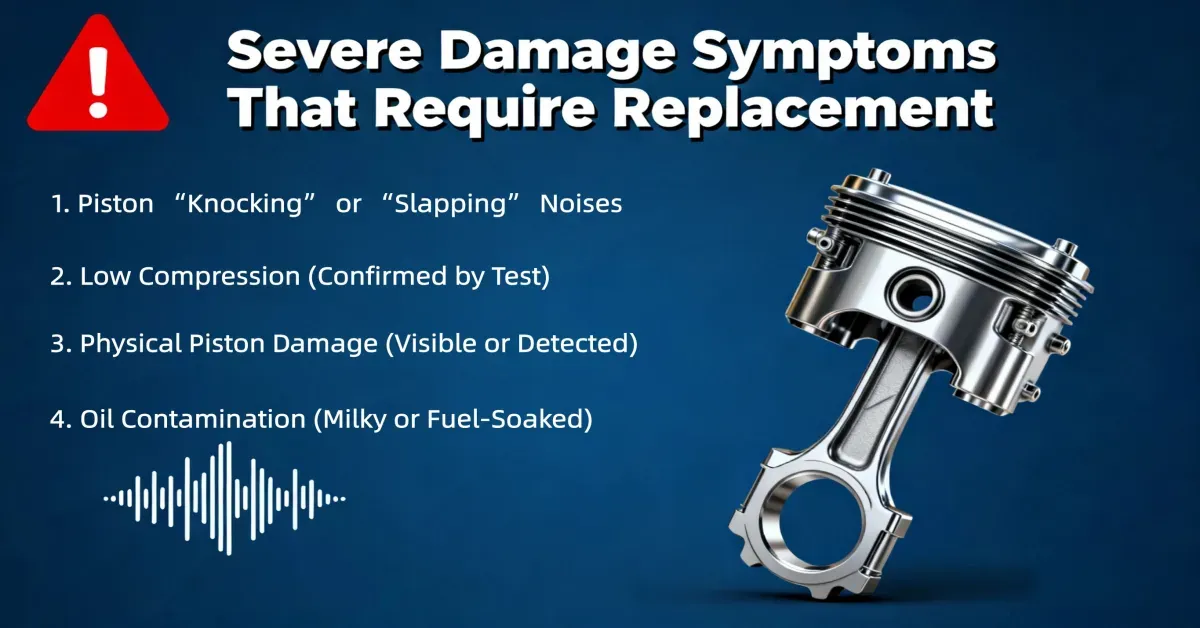
1. Piston “Knocking” or “Slapping” Noises
Distinct metallic noises from the engine block are clear red flags of severe piston damage. Two key sounds to distinguish:Piston Slap: A hollow, rhythmic “clattering” that’s loudest when the engine is cold and fades as components warm up (metal expands to reduce excess clearance). This occurs when the piston skirt (the lower, cylindrical portion) wears thin, creating too much space between the piston and cylinder wall. The piston shifts side-to-side as it moves, slapping against the wall.
Piston Knock: A sharp, repetitive “knock-knock-knock” that intensifies with higher RPM and doesn’t diminish when the engine warms. This is far more serious—caused by cracked pistons, broken piston pins (which connect the piston to the connecting rod), or worn connecting rod bearings. Left unaddressed, it can bend rods or seize the engine.
2. Low Compression (Confirmed by Test)
A compression test is the most definitive way to confirm severe piston wear. For gasoline engines, use these benchmarks to interpret results. Always test with a warm engine (operating temperature) for accuracy:Normal Compression: 120–190 psi per cylinder, with no more than 15 psi difference between cylinders (consistent pressure across all chambers).
Mild Wear: 100–120 psi—often fixable with piston ring replacement (no need for new pistons).
Severe Wear: ≤90 psi—indicates the piston itself is worn, cracked, or melted. Replacement is mandatory, as the piston can no longer seal the combustion chamber.
3. Physical Piston Damage (Visible or Detected)
Severe physical damage often requires partial engine disassembly or an endoscope (flexible camera) to visualize, but the associated symptoms are impossible to miss. Common types include:Cracked Piston: Caused by detonation (premature fuel ignition, often from low-octane fuel or faulty spark plugs) or extreme overheating. Creates a complete loss of compression in the affected cylinder and contaminates oil with metal shavings.
Melted Piston Top: Extreme heat—from a lean fuel mixture (not enough fuel for the air entering the cylinder) or failed ignition—melts the piston’s crown. This damages the combustion chamber and sends molten metal debris through the engine, risking cylinder wall scratches or bearing failure.
Seized Piston: The piston locks in the cylinder, making the engine impossible to crank. Triggered by insufficient oil (no lubrication), prolonged overheating, or severe wear. A seized piston almost always bends the connecting rod, adding to repair costs.
4. Oil Contamination (Milky or Fuel-Soaked)
Worn or damaged pistons break the seal between the combustion chamber and oil pan, leading to dangerous oil contamination. Both types below require immediate action—driving with contaminated oil destroys engine components:Fuel-Soaked Oil: Unburned fuel seeps past worn pistons into the oil pan, diluting the oil’s lubricating properties. You’ll notice a strong gasoline smell from the oil dipstick and reduced oil viscosity (feels thin between your fingers). This accelerates wear on the crankshaft, bearings, and camshaft.
Milky Oil: While often linked to a blown head gasket, a cracked piston can also let coolant leak into the oil pan. The mixture creates a creamy, light brown residue on the dipstick or oil fill cap. Coolant-contaminated oil causes corrosion and rapid bearing failure—engine seizure follows quickly.
Piston Replacement vs Engine Swap
When piston damage is confirmed, the big decision is: replace the pistons, or swap the entire engine? The answer depends on three factors: engine age/mileage, extent of damage, and cost. Below is a detailed comparison to guide your choice:Factor | Piston Replacement | Engine Swap |
|---|---|---|
Best For | Engines with ≤150k miles, no major damage to cylinder walls/crankshaft, and isolated piston wear (1–2 cylinders). | Engines with ≥200k miles, severe damage (cracked block, bent crankshaft), or repeated piston failures. |
Typical Cost | Professional: $1,500–$4,000 (parts + labor). DIY (advanced): $500–$1,500 (Linkteco piston kits include rings, pins, and clips). | Professional: $4,000–$10,000+ (used engine: $4k–$6k; new OEM engine: $8k–$10k+). |
Time Required | Professional: 4–8 hours (4-cylinder); 8–12 hours (V8/diesel). DIY: 12–20 hours (for experienced mechanics). | Professional: 8–16 hours (includes removing old engine and installing new one). |
Long-Term Reliability | 80k–120k miles (if cylinder walls are honed and new piston rings are properly seated). | 100k–150k miles (used engine); 150k+ miles (new OEM engine). |
Key Considerations | Requires cylinder wall inspection (must be smooth, no scratches). Linkteco’s pistons are OEM-matched for clearance, ensuring proper fit. | Check engine history (for used engines) and ensure compatibility with transmission/electronics. |
FAQ
Q1: Can worn pistons be repaired, or is replacement necessary?
Repair is only feasible for minor, isolated issues—severe damage requires full replacement:- Repairable Scenarios: If wear is limited to piston rings (e.g., carbon buildup causing oil burning, but the piston itself is undamaged), a “ring job” (replacing rings + honing cylinder walls) can resolve the problem. This costs 30–50% less than piston replacement and works for engines with ≤150k miles.
- Replacement Required: Cracked pistons, melted crowns, excessive skirt wear (more than 0.005 inches of clearance), or broken piston pins cannot be repaired. Welding or grinding these components weakens their structural integrity, leading to catastrophic failure under engine load (e.g., bent rods or seized cylinders).
Q2: How long do engine pistons typically last?
With proper maintenance, pistons are among the most durable engine components:- Passenger Cars: 150,000–250,000 miles (240,000–400,000 km) for aluminum alloy pistons (standard in most modern vehicles).
- Diesel Trucks/Heavy-Duty Vehicles: 200,000–300,000 miles (320,000–480,000 km) for forged steel pistons (designed to handle higher compression and heat).
- Skipping oil changes (sludge clogs piston rings, accelerating wear).
- Using low-octane fuel in high-compression engines (causes detonation, which cracks pistons).
- Aggressive driving (frequent high-RPM acceleration increases piston stress).
- Engine overheating (warps pistons and widens cylinder wall clearance).
Q3: Is piston replacement a DIY-friendly project?
Only for advanced DIYers with specialized tools and engine teardown experience—this is not a beginner task. Key reasons:- Tool Requirements: You’ll need an engine hoist, cylinder hone, torque wrench (calibrated to OEM specs), piston ring gap tool, and connecting rod installer. These tools cost $500–$1,000 if not already owned.
- Precision Needs: Piston ring gap (0.010–0.020 inches) and connecting rod torque (varies by engine) must be exact. A 10% torque error can cause oil leaks or rod failure.
- Risk of Mistakes: Installing a piston backwards (common with asymmetrical designs) or scratching the cylinder wall during installation will lead to repeated issues and higher costs.
Q4: Should I replace all pistons, or just the worn ones?
Always replace all pistons—even if only one shows wear. This is standard industry practice for three critical reasons:- Uniform Wear: Pistons operate under identical heat, pressure, and friction. If one is worn, the others are 80–90% through their lifespan—replacing just one means repeating the job in 10,000–20,000 miles.
- Compression Consistency: Mixing old and new pistons creates uneven compression across cylinders, leading to misfires, rough idling, and reduced fuel economy.
- Labor Efficiency: 60–70% of repair costs are labor for engine teardown. Replacing all pistons adds minimal parts cost but saves you from paying for labor twice.
Q5: What’s the difference between OEM, aftermarket, and forged pistons?
Choose the piston type based on your engine and usage:- OEM-Compatible Pistons: Engineered to match factory specs (material, clearance, weight) for stock engines. Ideal for daily drivers, commuter cars, and light trucks. Linkteco’s pistons use the same aluminum alloy as OEM parts and undergo pressure testing to meet IATF 16949 standards—backed by a 24-month warranty.
- Generic Aftermarket Pistons: 30–50% cheaper than OEM but risky. Often use low-grade aluminum or inconsistent machining, leading to premature cracking or oil burning. Avoid these unless recommended by a trusted mechanic.
- Forged Pistons: Made from forged steel or high-strength aluminum for high-performance engines (turbocharged, supercharged, or racing). They handle extreme heat (up to 5,000°F) and pressure but cost 2–3x more than OEM. Best for muscle cars, off-road trucks, or track vehicles.
Conclusion
Engine pistons are the backbone of combustion—their health directly impacts your vehicle’s power, fuel efficiency, and longevity. The most important lesson? Don’t ignore early warning signs. A quart of oil burned every 1,000 miles, blue exhaust smoke, or rough idling may seem minor, but they signal piston wear that will escalate into severe damage if left unaddressed. Waiting to replace worn pistons turns a $2,000 repair into an $8,000+ engine swap. By acting early and choosing quality parts, you protect your investment and keep your engine running reliably for years. At Linkteco, we’re committed to making piston replacement simple and cost-effective for both professional repair shops and experienced DIYers. Here’s how we support you:- Complete, Matched Piston Kits: Every kit includes pistons, piston rings, pins, clips, and gaskets—no need to source parts from multiple suppliers. We offer kits for 95% of popular makes (Ford, Chevy, Toyota, BMW) and models.
- OEM-Quality Performance: Our pistons are precision-machined to meet factory specs, ensuring a perfect fit and restoring compression to OEM levels. They’re tested to withstand extreme heat and friction, just like original parts.
- Expert Guidance: Not sure which piston fits your engine? Our ASE-certified team can match you to the right part using your VIN or engine code. We also provide detailed installation guides (including torque specs and ring gap settings) to ensure success.

Contact
©2026 LinkTeco All Rights Reserved.