

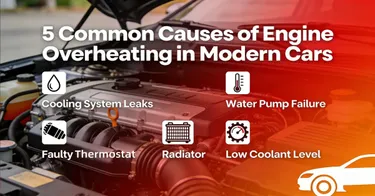
5 Common Causes of Engine Overheating in Modern Cars
Engine overheating remains one of the most frequent — and most costly — failures in modern vehicles. Although today’s engines deliver greater power, efficiency, and lower emissions, they operate under much tighter tolerances and significantly higher thermal stress than older designs. As a result, even a brief loss of temperature control can trigger serious damage.
When excess heat is not properly dissipated, critical components such as cylinder heads, head gaskets, pistons, and bearings are placed under extreme strain. In many cases, a single overheating incident is enough to cause permanent warping, sealing failure, or complete engine breakdown.
In this guide, we’ll explain the most common causes of engine overheating, how modern cooling systems manage heat, the early warning signs drivers should never ignore, and proven strategies to prevent overheating before it leads to expensive repairs or engine replacement.
Cooling System Basics
Before diagnosing overheating, you need to understand how your car’s cooling system keeps the engine at a safe temperature (typically 195–220°F / 90–104°C). Modern cooling systems are closed-loop systems with six core components working together:Coolant (Antifreeze): A mix of ethylene glycol (or propylene glycol) and water that absorbs engine heat. It also prevents freezing in cold weather and corrosion in the system.
Water Pump: The “heart” of the system—circulates coolant through the engine block, cylinder head, and radiator.
Thermostat: A temperature-sensitive valve that controls coolant flow. It stays closed when the engine is cold (to warm up fast) and opens when the engine reaches operating temperature (to let coolant circulate to the radiator).
Radiator: A heat exchanger that cools hot coolant. Air flows through the radiator’s fins (either from driving or the cooling fan) to dissipate heat from the coolant.
Cooling Fan: An electric or belt-driven fan that turns on when the car is idling or moving slowly (not enough natural air flow) to pull air through the radiator.
Hoses & Clamps: Carry coolant between components. Modern cars use flexible rubber hoses (prone to cracking over time) and metal hard lines.
Primary Causes of Overheating
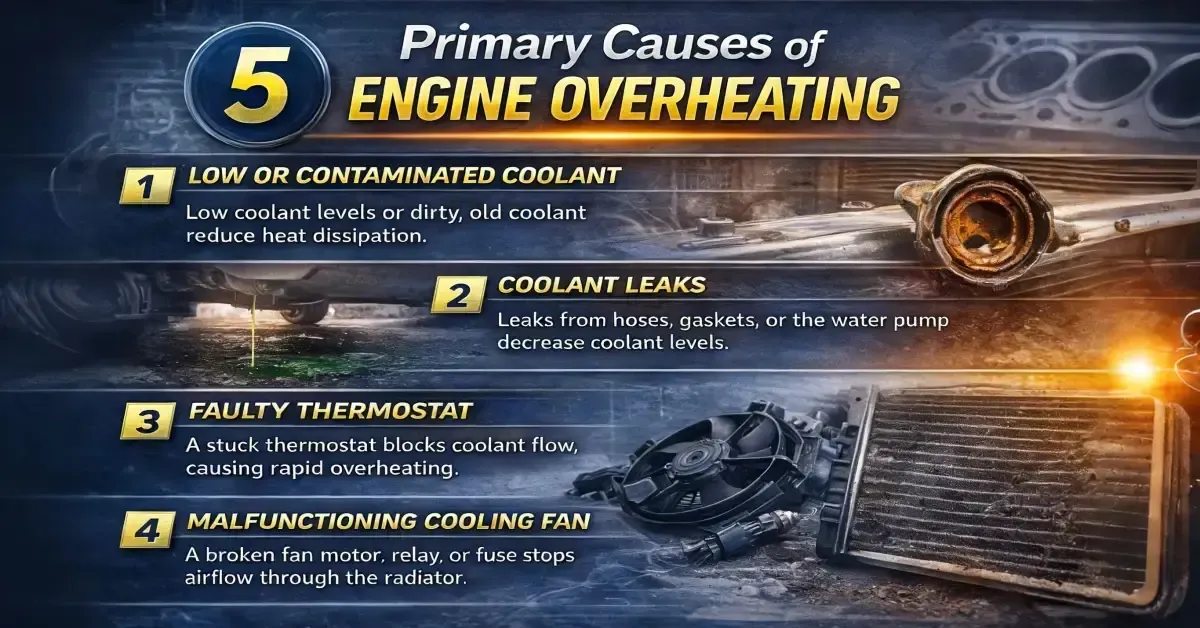
1. Low or Contaminated Coolant
The #1 cause of overheating is low coolant levels or coolant that’s degraded/ contaminated. Coolant can drop due to leaks (see below) or evaporation (rare in closed systems), while contamination happens when coolant is not replaced on schedule.Symptoms:The temperature gauge climbs above 220°F (104°C) during normal driving.
Coolant warning light (usually red or blue) illuminates on the dashboard.
Sweet, fruity smell (coolant) under the hood or inside the car.
2. Coolant Leaks
Low coolant is almost always caused by a leak—modern cooling systems are sealed, so coolant shouldn’t evaporate significantly. Leaks can occur in hoses, clamps, the radiator, water pump, or heater core.Symptoms:Puddles of bright green, pink, or orange fluid under the car (coolant colors vary by manufacturer).
Low coolant levels (even after topping up).
White steam from under the hood (if the leak is near hot engine parts).
3. Faulty Thermostat
A stuck-closed thermostat is a common cause of sudden overheating. If the thermostat doesn’t open when the engine warms up, coolant can’t flow to the radiator—so the engine overheats quickly (within 5–10 minutes of starting).Symptoms:The temperature gauge spikes to hot within minutes of starting the car (even in cold weather).
No heat from the cabin (heater core uses coolant to warm air—if coolant isn’t flowing, heat stops working).
Radiator stays cool (even when the engine is hot—check carefully, as the radiator can be hot to the touch).
4. Malfunctioning Cooling Fan
The cooling fan is critical for cooling when the car is idling or moving slowly (e.g., in traffic). Electric fans are controlled by a fan relay, temperature sensor, or ECU—if any of these fail, the fan won’t turn on, leading to overheating at low speeds.Symptoms:Overheating when idling or in stop-and-go traffic (temperature drops when driving at highway speeds).
The fan doesn’t turn on when the engine is hot (listen for the fan to kick in after 10–15 minutes of idling).
Burning smell from the engine bay (if the fan motor is faulty).
5. Clogged or Damaged Radiator
The radiator’s fins and tubes can become clogged with dirt, bugs, leaves, or debris—blocking air flow and reducing heat dissipation. Internal clogs (from contaminated coolant) can also prevent coolant from flowing through the radiator efficiently.Symptoms:Overheating in all driving conditions (idle and highway).
Radiator fins are covered in debris.
Uneven cooling (some parts of the radiator are hot, others are cold).
Secondary and Hidden Causes
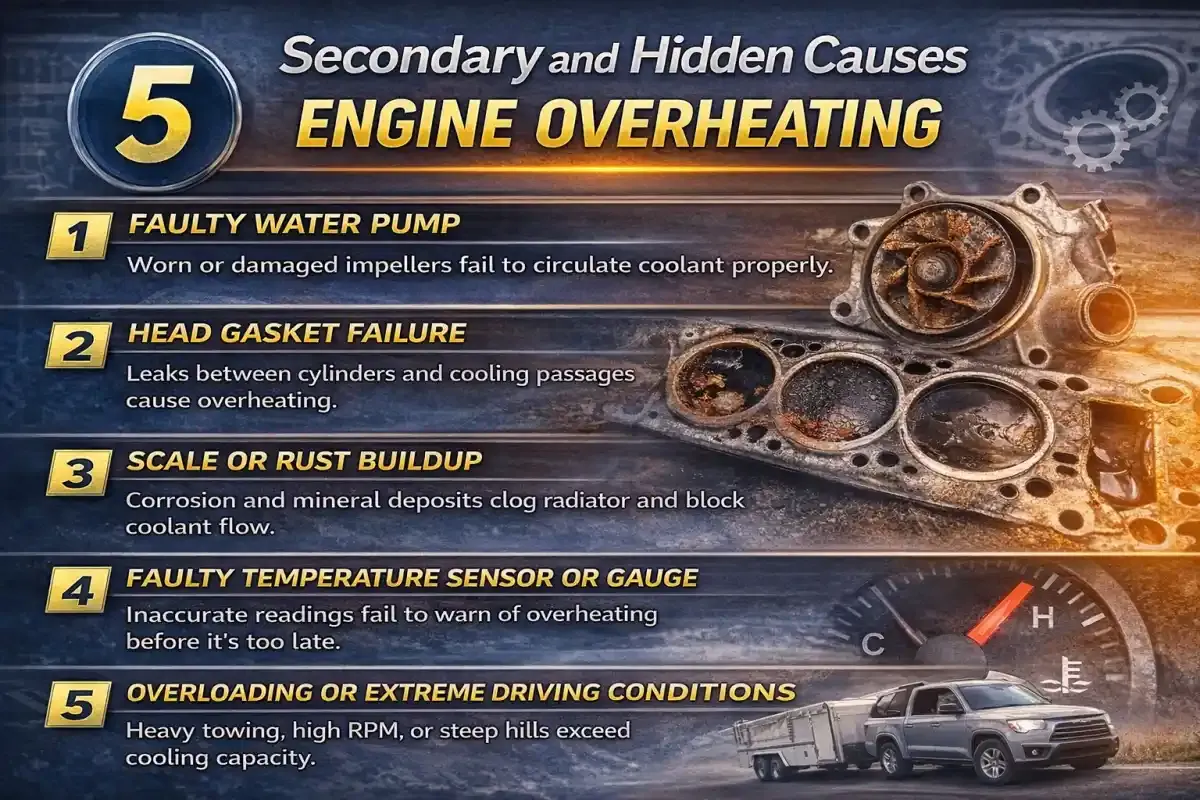
1. Faulty Water Pump
The water pump is responsible for circulating coolant—if it fails (e.g., bearing wear, impeller damage), coolant flow stops, and the engine overheats quickly. Water pump failure is more common in high-mileage cars (100,000+ miles).Symptoms:Suddenly, severe overheating (even after topping up coolant).
Whistling or grinding noise from the front of the engine (water pump bearing failure).
Coolant leak from the water pump pulley area (weep hole leak—sign of seal failure).
2. Head Gasket Failure
A blown head gasket is a severe issue that can cause overheating—and it’s often a result of untreated overheating. The head gasket seals the cylinder head to the engine block; if it fails, coolant can leak into the combustion chamber or oil passages.Symptoms:White, sweet-smelling smoke from the exhaust (coolant burning in the engine).
Milky, frothy oil (coolant mixing with oil—check the oil dipstick).
Coolant level drops with no visible leaks.
The engine misfires or runs rough.
3. Scale or Rust Buildup
If coolant is not replaced regularly, minerals in water (hard water) can form scale, and metal components can rust—clogging the engine’s coolant passages. This reduces coolant flow, preventing heat from being transferred to the coolant.Symptoms:Gradual overheating (worsens over months).
Coolant is discolored (brown, rusty).
The heater works intermittently (heater core is clogged).
4. Faulty Temperature Sensor or Gauge
Sometimes, the engine isn’t actually overheating— the temperature sensor (sends data to the gauge) or the gauge itself is faulty. This is a “false overheating” issue but still needs to be fixed to avoid ignoring real problems.Symptoms:Temperature gauge spikes to hot instantly (even when the engine is cold).
Gauge fluctuates wildly (hot to cold and back) for no reason.
Engine runs normally (no loss of power, no steam) despite the gauge reading hot.
5. Overloading or Extreme Driving Conditions
Even a healthy cooling system can be overwhelmed by extreme conditions. This is a “environmental” cause but still important to recognize.Common Triggers:Towing heavy loads (trailers, boats) in hot weather.
Driving up steep hills at low speeds (high engine load, low air flow).
Driving in extreme heat (100°F+ / 38°C+) with the AC on full blast.
How to Prevent Overheating
Most engine overheating issues are preventable with regular maintenance. Follow these tips to keep your cooling system in top shape:Check Coolant Regularly: Inspect the coolant level monthly (when the engine is cold) and top up with the correct type if needed. Never open the radiator cap when the engine is hot—pressurized hot coolant can spray and burn you.
Replace Coolant on Schedule: Flush and replace coolant every 3–5 years or 30,000–50,000 miles (follow your owner’s manual). Use pre-mixed coolant or mix 50/50 with distilled water (avoid tap water, which causes scale).
Inspect Hoses and Clamps: Check hoses for cracks, bulges, or softness (a sign of aging) every 6 months. Replace hoses every 5–7 years (even if they look fine—rubber deteriorates over time).
Clean the Radiator: Remove debris from the radiator fins annually (use a soft brush and low-pressure water). Avoid pressure washing, which can bend fins and reduce efficiency.
Test the Cooling Fan: Let the car idle until hot and confirm the fan turns on. If not, replace the relay or fan motor immediately.
Maintain the Water Pump: Replace the water pump every 100,000 miles or 10 years (even if it’s working)—most fail suddenly, leading to severe overheating. Replace the timing belt at the same time (if they’re connected).
Avoid Overloading: Don’t exceed your car’s towing capacity or carry excessive weight in the trunk/roof rack.
FAQ
Q1: Can I keep driving when the engine is overheating?
No—never drive an overheating engine. Even a short drive (1–2 miles) can warp the cylinder head, blow the head gasket, or seize the engine (permanent damage). If the temperature gauge rises to hot or the coolant warning light comes on:Pull over to a safe location immediately and turn off the engine.
Let the engine cool for at least 30 minutes (do not open the radiator cap).
Check the coolant level (when cold) and top up if needed. If there’s a visible leak, call a tow truck—driving further will make the problem worse.
Q2: What should I do if my engine overheats on the highway?
If you’re on the highway and the temperature gauge spikes:Turn off the AC (reduces engine load) and turn on the heater to full blast (draws heat from the engine).
Slow down gradually and move to the shoulder.
Turn off the engine and let it cool for 30+ minutes. Do not attempt to add coolant until the engine is completely cold.
If you can’t find a leak and the coolant level is normal, call a tow truck—this is likely a thermostat, water pump, or head gasket issue.
Q3: How often should I replace coolant?
Per SAE coolant reports and manufacturer recommendations:Ethylene glycol coolant (most common): Every 3–5 years or 30,000–50,000 miles.
Propylene glycol coolant (environmentally friendly): Every 5–7 years or 50,000–70,000 miles.
Never mix different types of coolant—this can cause chemical reactions that damage the cooling system.
Q4: Can low oil cause overheating?
Yes—oil lubricates engine parts and helps dissipate heat. Low or dirty oil reduces heat transfer, leading to increased engine temperature. While low oil isn’t a direct cooling system issue, it can contribute to overheating. Always check oil levels regularly and change oil on schedule.Q5: Is overheating more common in certain types of cars?
Yes—cars with turbocharged engines, high-performance engines, or older cooling systems are more prone to overheating. Turbochargers generate extra heat, so their cooling systems are under more stress. Older cars (10+ years) often have worn hoses, pumps, or radiators that need replacement.Conclusion
Engine overheating is a serious issue, but it’s almost always preventable with regular cooling system maintenance. The key is to catch symptoms early (spiking temperature gauge, sweet smell, steam) and address the cause immediately—ignoring it will only lead to more costly repairs. At Linkteco, we offer high-quality cooling system parts (thermostats, water pumps, radiators, hoses) designed for modern cars. All our parts meet OEM specs and come with a warranty, ensuring reliability and performance. Whether you’re a DIYer or a repair shop, we have the parts and resources you need to fix overheating issues. If you’re dealing with a blown head gasket or need to rebuild your engine’s top end, check out ourtop-end rebuild guide for step-by-step instructions. For help determining when to replace your engine gasket, visit our replacement interval resource. Not sure what’s causing your engine to overheat? Contact our ASE-certified technicians for free diagnostic advice. We can help you identify the issue and recommend the right parts for your car. Visit our website to browse our cooling system parts or request a quote today—keep your engine cool and running smoothly.
Contact
©2026 LinkTeco All Rights Reserved.