

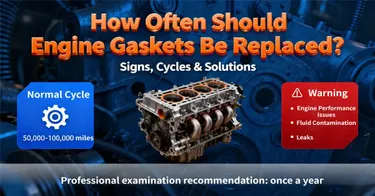
How Often Should Engine Gaskets Be Replaced?
Role of Gaskets in Engine Sealing
- Containing pressure: Head gaskets seal combustion chambers (where pressure reaches 1,000+ psi) to ensure power is transferred to pistons, not lost as leaks.
- Separating fluids: Oil pan gaskets keep engine oil inside the pan (preventing leaks onto the ground), while intake manifold gaskets separate coolant channels from air-fuel passages (avoiding contamination).
- Withstanding extremes: Exhaust manifold gaskets tolerate temperatures up to 850°C, while valve cover gaskets resist oil degradation and vibration.
Typical Lifespan of Different Engine Gaskets
1. Head Gasket: 100,000–150,000 Miles (160,000–240,000 km)
- Engine overheating (even once can warp the cylinder head, breaking the gasket seal).
- Using low-quality coolant (causes corrosion of gasket materials).
- Improper installation (over-tightening bolts crushes the gasket, while under-tightening leaves gaps).
2. Intake Manifold Gasket: 80,000–120,000 Miles (128,000–192,000 km)
- Frequent cold starts (cause the rubber to expand and contract rapidly).
- Oil contamination (leaking valve cover gaskets can soak the intake gasket, breaking down rubber).
3. Exhaust Manifold Gasket: 50,000–100,000 Miles (80,000–160,000 km)
- Short trips (the manifold never fully heats up, leading to moisture buildup and rust).
- Turbocharging (adds extra heat and pressure to the exhaust system).
4. Valve Cover Gasket: 80,000–200,000 Miles (128,000–320,000 km)
- Oil leaks from other gaskets (soaks the valve cover gasket, causing the rubber to degrade).
- Vibration (loosens valve cover bolts, reducing gasket compression).
5. Oil Pan Gasket: 70,000–150,000 Miles (112,000–240,000 km)
- Road damage (hitting curbs or rocks can dent the oil pan, breaking the gasket seal).
- Poor oil quality (old or contaminated oil accelerates rubber breakdown).
Signs It’s Time for Gasket Replacement
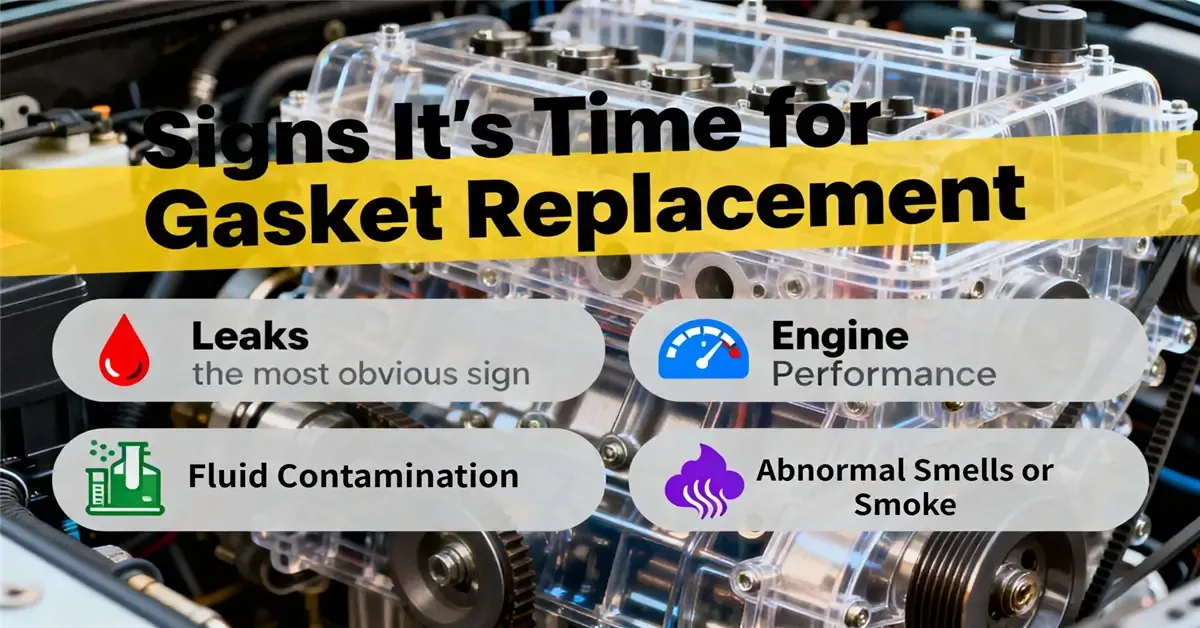
1. Leaks (the most obvious sign)
- Coolant leaks (green/red fluid):
Puddles under the engine: Likely an oil pan gasket or water pump gasket leak.
White residue on the cylinder head: Indicates a head gasket leak (coolant seeps out and dries).
- Oil leaks (black/brown fluid):
Oil on the top of the engine: Usually, a valve cover gasket leak (oil drips onto the cylinder head).
Oil on the bottom of the engine: Could be an oil pan gasket or rear main seal leak (but oil pan gaskets are more common to fail).
- Exhaust leaks:
Loud ticking/hissing noise from the engine bay: Exhaust manifold gasket leak (gases escape between the manifold and head).
2. Engine Performance Issues
- Overheating: A head gasket leak lets coolant escape, reducing the engine’s ability to cool down. The temperature gauge will spike, or the overheat warning light will turn on.
- Loss of power: An intake manifold gasket leak lets unfiltered air into the engine, disrupting the air-fuel mixture. You’ll notice sluggish acceleration or rough idling.
- Increased oil consumption: A valve cover gasket leak lets oil drip onto hot engine parts (burning it off), leading to low oil levels between changes.
3. Fluid Contamination
- Milky oil (on dipstick or oil cap): Coolant has leaked into the oil (usually from a bad head gasket). This creates a creamy, frothy substance that destroys engine bearings.
- Oil in coolant (in radiator or reservoir): Oil seeps into the coolant system (common with intake manifold gasket leaks in older vehicles). The coolant will look cloudy or have an oily sheen.
4. Abnormal Smells or Smoke
- Burning oil smell: A valve cover gasket leak lets oil drip onto the exhaust manifold, creating a burnt odor.
- Sweet coolant smell: A head gasket or intake manifold gasket leak releases coolant, which has a sweet, syrupy scent.
- White smoke from exhaust: Coolant burns in the combustion chamber (head gasket failure)—this smoke is thick and doesn’t dissipate like normal exhaust.
Preventive Maintenance for Longer Gasket Life
1. Follow Fluid Maintenance Schedules
- Coolant: Flush and replace coolant every 3–5 years (per your vehicle’s manual). Use the OEM-recommended coolant (e.g., ethylene glycol for most cars) to avoid corrosion of gasket materials.
- Oil: Change oil every 5,000–7,500 miles (or as recommended). Old oil breaks down rubber gaskets, so using high-quality synthetic oil (API SN or higher) helps preserve gaskets.
2. Avoid Engine Overheating
- Check coolant levels monthly (especially in summer). Low coolant causes overheating, which is the #1 cause of head gasket failure.
- Replace a faulty thermostat or water pump immediately—both can cause overheating even if coolant levels are normal.
3. Use Proper Installation Techniques
- Bolts are tightened to OEM torque specs (over-tightening crushes gaskets; under-tightening leaves gaps). Use a torque wrench for accuracy.
- Gasket surfaces are clean and flat (remove old gasket residue with a scraper, and check for warping with a straightedge).
- You use the right gasket sealer (if needed)—some gaskets (e.g., MLS head gaskets) don’t require sealer, while rubber gaskets may need a thin layer to enhance sealing.
4. Inspect Gaskets During Routine Repairs
- Check the valve cover gasket for cracks or oil leaks when replacing spark plugs.
- Inspect the intake manifold gasket for signs of swelling or hardening when servicing the throttle body.
FAQ
1. Do all engine gaskets need to be replaced at once?
2. Can I reuse old gaskets?
3. How much does it cost to replace a gasket?
- Valve cover gasket: 100–300 (low labor, simple part—Linkteco’s wholesale price: 8–15 per gasket).
- Intake manifold gasket: 300–800 (more labor to remove the manifold—wholesale price: 12–25 per gasket).
- Head gasket: 1,500–3,000 (high labor to remove the cylinder head—wholesale price: 25–50 per gasket).
4. What if I ignore a faulty gasket?
- Engine seizure: A head gasket leak mixes coolant and oil, destroying bearings and pistons (costing 3,000–5,000 to repair).
- Cylinder head warping: Overheating from a coolant leak warps the cylinder head (requires machining or replacement, adding 500–1,000 to repairs).
- Environmental damage: Oil or coolant leaks pollute soil and water, leading to fines for commercial fleets.
Conclusion
- Need to stock up on gaskets? Browse our Gaskets Wholesale category for bulk pricing on head gaskets, intake gaskets, and more.
- Have questions about gasket fitment? Use our Contact Page to share your vehicle make/model, and our team will recommend the right gasket for your needs.
- Want to learn more? Visit the Linkteco Homepage for guides on gasket installation, engine maintenance, and other auto parts topics.

Contact
©2026 LinkTeco All Rights Reserved.