

Engine Block vs Cylinder Head: Differences Explained
Understand the differences between an engine block and cylinder head. Functions, issues, and wholesale replacement parts from Linkteco.
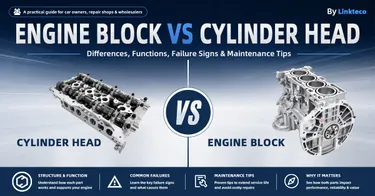
When you pop the hood of your car, the engine’s most recognizable "big parts" are the engine block and cylinder head. But while they work hand-in-hand to power your vehicle, they’re two distinct components with unique roles, designs, and failure risks. Whether you’re a DIY mechanic trying to diagnose a leak, a repair shop owner sourcing parts, or a wholesale buyer stocking inventory, understanding the difference between engine block and cylinder head is critical.
As a leading wholesale engine parts supplier (Linkteco), we manufacture both engine blocks and cylinder heads for 95% of global vehicle brands—so we’re breaking down their key differences, functions, and why quality matters for both.
What Is an Engine Block?
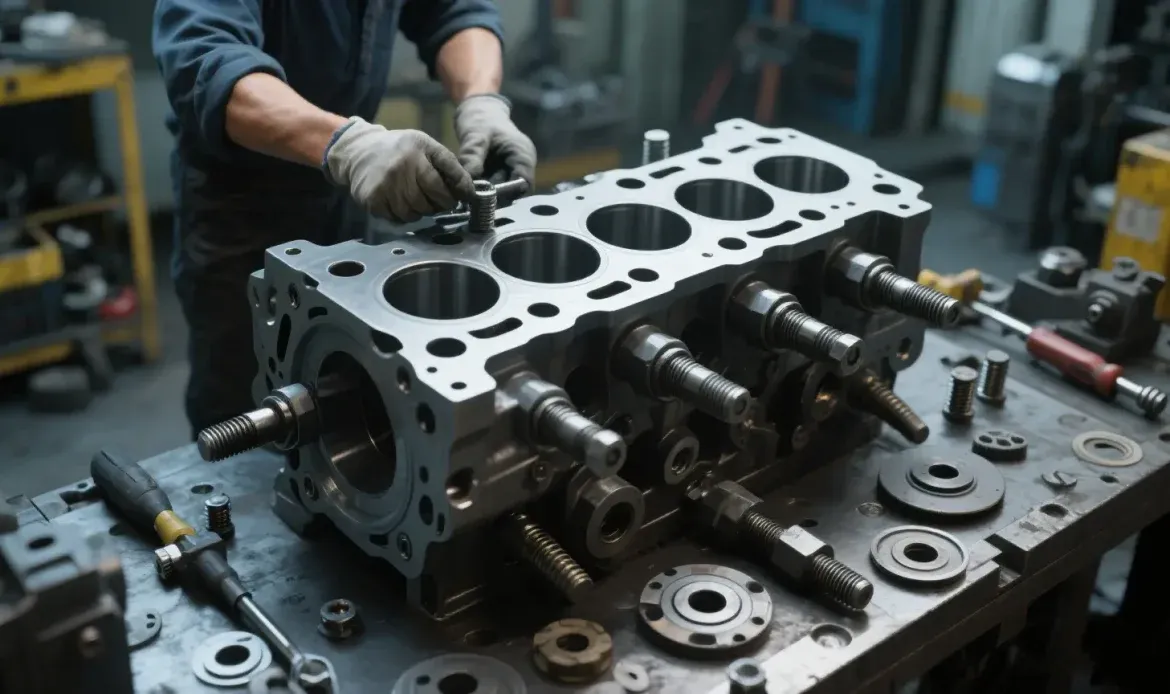
The engine block (also called the "cylinder block") is the foundation of the engine—a heavy, rigid metal casting that holds and aligns nearly all core engine components. Think of it as the "frame" of a house: everything else (pistons, crankshaft, etc.) attaches to or sits inside it.
Key Structure & Material
Engine blocks are typically made from two materials, each suited to specific vehicle needs:
- Cast iron: Durable and heat-resistant, ideal for heavy-duty trucks (e.g., Ford F-250) and diesel engines. Cast iron blocks can withstand extreme pressure (up to 20 bar in diesel engines) but are heavier (adds 10–15 lbs to the engine).
- Aluminum alloy (T6 temper): Lightweight (30% lighter than cast iron) and better at dissipating heat, used in most passenger cars (e.g., Toyota Camry, Honda Civic). Linkteco’s aluminum blocks use a high-pressure die-casting process to ensure uniform density, preventing cracks from thermal stress.
Inside the block, you’ll find:
- Cylinder bores: Smooth, cylindrical holes where pistons slide up and down (the number of bores matches the engine’s cylinder count, e.g., 4 bores for a 4-cylinder engine).
- Crankcase: A lower section that houses the crankshaft and oil pan, with bearings to reduce friction between the crankshaft and block.
- Coolant channels: Built-in passages that circulate coolant to cool the block and prevent overheating.
- Oil galleries: Tiny drilled holes that deliver oil to moving parts (crankshaft bearings, piston pins) for lubrication.
Core Function
The engine block’s job is to:
- Support components: Keep pistons, crankshaft, and cylinder head aligned—even under the force of combustion (which can reach 1,000 psi per cylinder).
- Contain combustion: Seal the bottom of the cylinders to trap the air-fuel mixture as it ignites, ensuring power is transferred to the pistons (not lost as leaks).
- Manage heat: Use coolant channels to pull heat away from the cylinders, keeping the block at a safe operating temperature (82–95°C).
What Is a Cylinder Head?
The cylinder head is a precision-machined "lid" that sits on top of the engine block, sealed by a head gasket. It’s the "control center" of combustion, managing airflow, fuel ignition, and exhaust.
Key Structure & Material
Like engine blocks, cylinder heads are made from materials optimized for performance:
- Aluminum alloy: The most common choice (used in 90% of modern engines) because it’s lightweight and transfers heat quickly—critical for cooling the combustion chamber. Linkteco’s cylinder heads use A356 aluminum (heat-treated to T6 temper) for strength, with inserted valve seats (made from copper-nickel alloy) to resist wear from valves.
- Cast iron: Rare today, but still used in some heavy-duty diesel engines (e.g., older Cummins trucks) for extreme durability.
The cylinder head’s key features include:
- Combustion chambers: Bowl-shaped cavities above each cylinder where the air-fuel mixture ignites. The shape (e.g., pent-roof, flat-top) affects fuel efficiency and power—Linkteco’s chambers are CNC-machined to a smooth finish (Ra 0.8μm) to optimize burn.
- Valves: Intake valves (let air-fuel in) and exhaust valves (let waste gases out), each controlled by camshaft lobes. A typical 4-cylinder head has 8 valves (2 per cylinder), while performance engines (e.g., Honda VTEC) have 16 valves.
- Spark plug wells (gasoline engines): Holes that hold spark plugs, positioned to ignite the air-fuel mixture at the perfect moment.
- Coolant and oil passages: Channels that align with the engine block’s passages, ensuring coolant cools the head and oil lubricates the valve train.
Core Function
The cylinder head’s main roles are:
- Control airflow: Open intake valves at the right time to let air-fuel into the cylinder, and exhaust valves to expel gases—timing synced with the piston’s movement (via the camshaft).
- Enable combustion: Provide a sealed space (combustion chamber) for the air-fuel mixture to ignite, with spark plugs (gasoline) or injectors (diesel) delivering the spark/fuel.
- Cool and lubricate: Circulate coolant to prevent the head from overheating (combustion temperatures reach 2,500°C) and oil to keep valves moving smoothly.
Engine Block vs Cylinder Head: Key Differences (Insert Comparison Table)
While the engine block and cylinder head work together, they differ in design, function, and maintenance needs. Below’s a side-by-side comparison:
| Feature | Engine Block | Cylinder Head |
|---|---|---|
| Location | Lower part of the engine | Mounted on top of the engine block |
| Main Function | Houses cylinders, crankshaft, and supports the combustion process | Houses valves, ports, and seals the combustion chamber |
| Materials | Cast iron or aluminum | Aluminum alloy (sometimes cast iron) |
| Complexity | Structural base, fewer moving parts | Precision-machined, integrates valves & camshaft |
| Failure Risks | Cracks, warping, coolant/oil leaks | Warping, valve failure, gasket leaks |
| Wholesale Demand | Lower turnover, bulk orders for rebuilders | Higher turnover, frequent replacement demand |
Why Both Are Critical for Engine Performance
You can’t have a working engine without either the block or head—here’s why both matter:
Engine Block: The "Strength" Factor
A weak or damaged block spells disaster:
- Cracks in the block (from overheating or impact) leak coolant and oil, leading to engine seizure (if lubrication/cooling fails). Linkteco’s blocks undergo pressure testing (10 bar) to detect even tiny cracks before shipping.
- Worn cylinder bores (from piston friction) reduce compression, causing loss of power and increased fuel consumption. Our blocks have hardened bores (via nitriding) to extend wear life by 50%.
Without a solid block, the engine’s moving parts have no stable base—resulting in vibrations, misalignment, and total failure.
Cylinder Head: The "Precision" Factor
The head controls how efficiently the engine burns fuel—directly impacting power and efficiency:
- Warped cylinder head (from overheating) fails to seal with the block, causing coolant leaks (white smoke from the exhaust) and low compression. Linkteco’s heads are stress-relieved (heated to 600°C and cooled slowly) to prevent warping.
- Damaged valves (stuck or bent) disrupt airflow, leading to misfires (rough idling) and reduced power. Our heads use hardened valve seats (55 HRC) to resist valve wear.
A faulty head turns even a strong block into an underperforming engine—e.g., a leaking head gasket can cause the engine to overheat in 10–15 minutes of driving.
Signs of Damage in Engine Block or Cylinder Head
Knowing how to spot damage saves you from costly repairs later. Here’s what to look for:
Engine Block Damage Signs
- Coolant leaks under the engine: Puddles of green/red fluid (coolant) under the car, especially after driving, may indicate a cracked block.
- Low oil pressure: The oil pressure light comes on while driving, or the gauge reads below normal—could mean oil is leaking from a cracked gallery.
- Overheating (constant): The engine temperature gauge hits "hot" even after adding coolant—cracks in the block may prevent coolant from circulating.
- Metal shavings in oil: Drained oil has silver/gold flakes—signals worn cylinder bores or crankshaft bearings (both inside the block).
Cylinder Head Damage Signs
- White smoke from exhaust: Thick, sweet-smelling smoke (not water vapor) means coolant is leaking into the combustion chamber (often from a blown head gasket or cracked head).
- Milky oil: Oil on the dipstick looks like chocolate milk—coolant has mixed with oil (a sign of head gasket failure or head cracks).
- Misfires or rough idling: The engine shakes at idle, or the check engine light flashes—stuck valves or a warped head disrupt combustion.
- Loss of power: The car accelerates slowly, even when pressing the gas—reduced compression from a leaking head gasket or worn valves.
If you notice any of these, stop driving immediately. For repair shops, Linkteco offers fast shipping on replacement blocks and heads (1–5 days for in-stock items) to minimize downtime.
FAQ
1. Which component fails more often: engine block or cylinder head?
The cylinder head fails more frequently—here’s why:
- It’s exposed to higher temperatures (combustion happens directly in the head’s chambers).
- The head gasket (between block and head) is a common failure point (wears out from heat cycles).
- Valves and valve seats wear faster than cylinder bores (moving parts = more friction).
Linkteco’s data shows head-related repairs (gaskets, valve damage) are 3x more common than block issues. That’s why our Cylinder Head Wholesale category stocks 2x more heads than blocks—we align with repair demand.
2. Can you replace the engine block without replacing the cylinder head (or vice versa)?
Yes, you don’t need to replace both unless both are damaged. For example:
- If the block is cracked but the head is in good shape, you can swap the block (just reuse the head after inspecting it for warping).
- If the head is warped but the block is fine, replace the head (Linkteco’s heads are pre-machined to fit OEM blocks, so no extra work is needed).
Pro tip: When replacing either, always replace the head gasket (it’s a wear part) and align the block/head’s coolant/oil passages—Linkteco’s replacement kits include gaskets and alignment tools to make this easy.
3. How long do engine blocks and cylinder heads last?
With proper maintenance (regular oil changes, coolant flushes):
- Engine blocks: 200,000–300,000 miles (cast iron lasts longer than aluminum).
- Cylinder heads: 150,000–250,000 miles (valve seats may need replacement at 150k miles).
Linkteco’s blocks and heads are tested to last 250,000+ miles—our aluminum blocks use a hard-anodized finish to resist corrosion, and heads have reinforced valve guides for durability.
4. Are aftermarket engine blocks/heads as good as OEM?
It depends on the supplier. Cheap aftermarket parts often have loose tolerances (e.g., a 0.1mm off cylinder bore), but Linkteco’s parts match OEM specs:
- Our blocks have a cylinder bore tolerance of ±0.005mm (same as Toyota/Ford OEM).
- Heads are CNC-machined to the same combustion chamber shape as OEM, ensuring no loss of power or efficiency.
We even test our parts on the same equipment as OEMs—e.g., using a coordinate measuring machine (CMM) to verify dimensions.
5. Do I need to machine the engine block when installing a new cylinder head?
Only if the block’s "deck surface" (where the head gasket sits) is warped or rough. To check:
- Use a straightedge and feeler gauge—if the gap between the straightedge and the deck is more than 0.05mm, the block needs machining.
- Linkteco’s new blocks come with a pre-machined deck surface (Ra 1.6μm), so you can install the head directly—saving repair shops 1–2 hours of labor.
Conclusion
The engine block and cylinder head are two sides of the same coin: the block provides strength and support, while the head delivers precision and combustion control. Understanding their differences helps you diagnose issues faster, source the right parts, and keep engines running longer.
Whether you’re a repair shop needing a replacement cylinder head or a distributor stocking up on engine blocks, Linkteco has you covered. As a manufacturer, we control every step of production—from raw materials to final testing—so our parts are reliable, affordable, and OEM-compatible.
- Browse our Cylinder Head Wholesale category for fast shipping on heads for Toyota, Ford, BMW, and more.
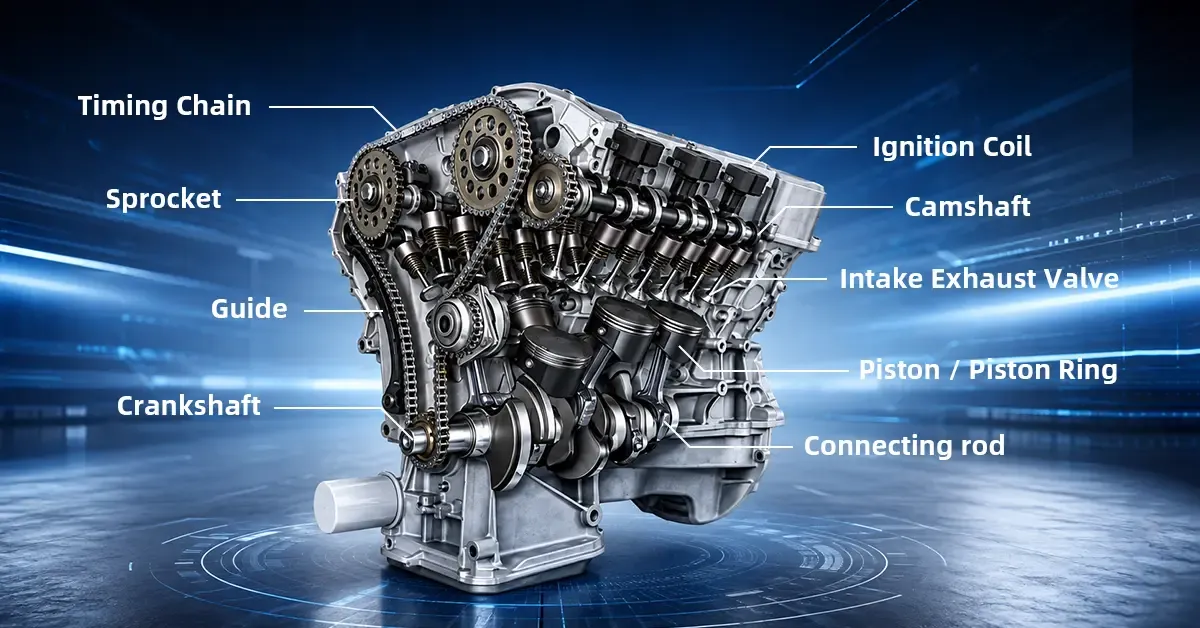
- Learn more about core engine components in our guide: Top 5 Components of a Car Engine.
- Ready to place a wholesale order? Visit our Linkteco Homepage or contact our team—we offer custom OEM solutions and bulk discounts for large orders.
Don’t let faulty blocks or heads slow you down—trust Linkteco for parts that last.

Catalog
Quick Link
Support
Contact
Tel: +8619168959101
Email: info@linktecowholesale.com
Add: 12/F, Building 3C, TianAn Cloud Park Phase 1, Bantian, Longgang District, Shenzhen, 518129, China
©2026 LinkTeco All Rights Reserved.