


Top 5 Components of a Car Engine Every Driver Should Know
Learn the 5 most important car engine parts and how they work together. Simple guide for drivers from Linkteco, wholesale engine parts supplier.
When you turn the key or press the start button of your car, a complex "power machine" under the hood springs to life—but most drivers only notice it when something goes wrong. Understanding the top 5 components of a car engine isn’t just for mechanics; it helps you spot early issues, communicate better with repair shops, and even make smarter decisions about maintenance.
Whether you drive a compact sedan, a heavy-duty pickup, or a luxury SUV, these five parts form the backbone of your engine’s performance. As a leading wholesale engine parts supplier (Linkteco), we’ve spent 15+ years manufacturing and supplying these critical components to global clients—so we’re breaking down their roles in simple, beginner-friendly terms.
Why These 5 Engine Components Matter Most
Think of your car engine as a team: every part has a job, but some players are irreplaceable. These five components are the "starting lineup"—without them, your engine won’t run, and even small failures here can lead to costly breakdowns.
For example: A cracked engine block can leave you stranded; a faulty piston means lost power; a worn crankshaft causes destructive vibrations. By learning what they do, you’ll recognize warning signs (like strange noises or reduced fuel efficiency) early. Plus, if you ever need to replace parts—whether for personal use or bulk orders as a distributor—knowing the basics helps you choose reliable suppliers (like Linkteco, a manufacturer with 85% stock availability for fast fulfillment).
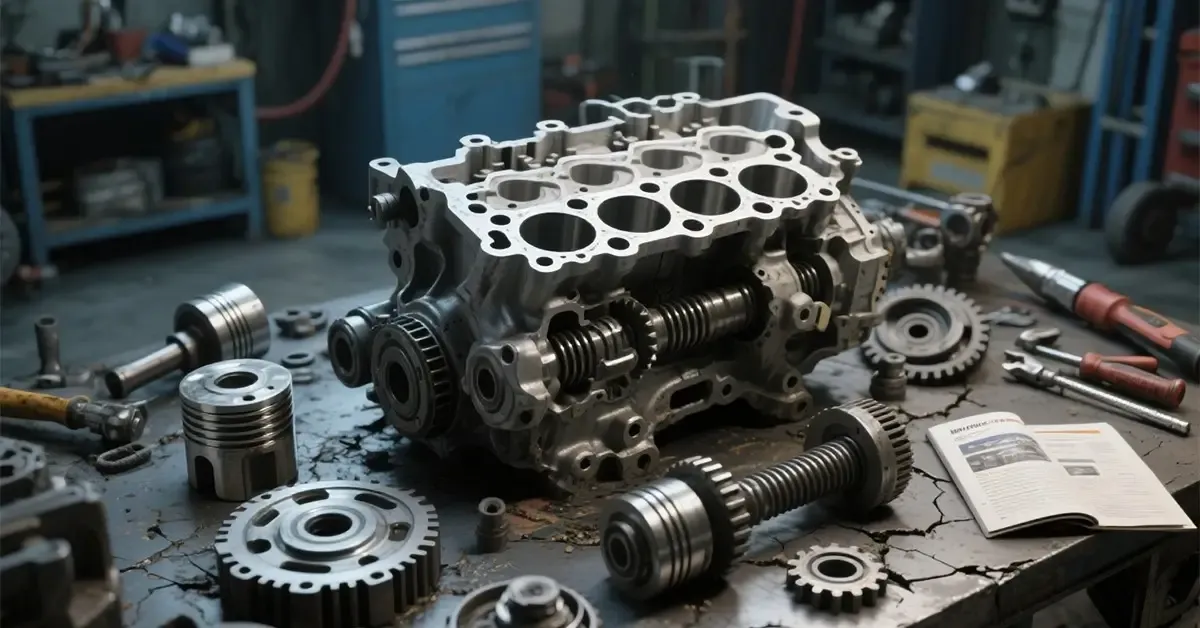
Engine Block
What It Is
The engine block (also called the cylinder block) is the "foundation" of your engine—a large, heavy metal casting (usually aluminum or cast iron) that holds all major internal components. It’s the most durable part of the engine, designed to withstand extreme heat and pressure.
What It Does
- Houses the cylinders: These are the cylindrical chambers where fuel and air mix, ignite, and create power. Engines are classified by cylinder count (e.g., L4, V6, V8)—and the block is what gives them their shape (inline, V-shaped, etc.).
- Supports critical parts: The block holds the crankshaft, pistons, and oil passages, ensuring everything stays aligned during operation.
- Cools the engine: Most blocks have built-in coolant channels that circulate fluid to prevent overheating.
Why It’s Non-Negotiable
A damaged engine block (from overheating, corrosion, or impact) is one of the most expensive repairs—often costing more than replacing the entire engine. That’s why quality matters: Linkteco’s engine blocks are manufactured to meet OEM standards, compatible with major brands like GM, Ford, Jeep, and Toyota (covering American, European, Japanese, and Korean markets). For bulk buyers, our Engine Block Wholesale category page offers competitive pricing and 7–25 day delivery on in-stock items.
Pro Tip for Beginners
If your engine overheats repeatedly, check the block for cracks—small leaks in the coolant channels can cause temperature spikes. Always use the coolant recommended by your vehicle’s manufacturer (you can find guidelines on auto manufacturer engine overview pages like Toyota’s or Ford’s).
Pistons
What They Are
Pistons are cylindrical metal parts (usually aluminum) that slide up and down inside the engine block’s cylinders. Each cylinder has one piston, and they’re connected to the crankshaft via connecting rods.
What They Do
Pistons are the "muscles" of the engine—they convert fuel energy into mechanical motion through the four-stroke cycle:
- Intake stroke: Piston moves down, drawing in air and fuel.
- Compression stroke: Piston moves up, squeezing the air-fuel mixture.
- Power stroke: The mixture ignites (via spark plug), pushing the piston down hard—this creates the engine’s power.
- Exhaust stroke: Piston moves up again, pushing exhaust gases out.
Without pistons, there’s no "push" to turn the crankshaft—and no power to move your car.
Common Issues & Linkteco’s Solution
Worn piston rings (the seals around the piston) cause oil leaks, reduced power, and increased fuel consumption. Linkteco manufactures high-precision pistons and piston kits (part of our overhaul kits) that match OEM specifications. Our R&D team of 20+ engineers tests each batch for durability, ensuring they withstand high temperatures and pressure—critical for performance vehicles and heavy-duty pickups.
Crankshaft
What It Is
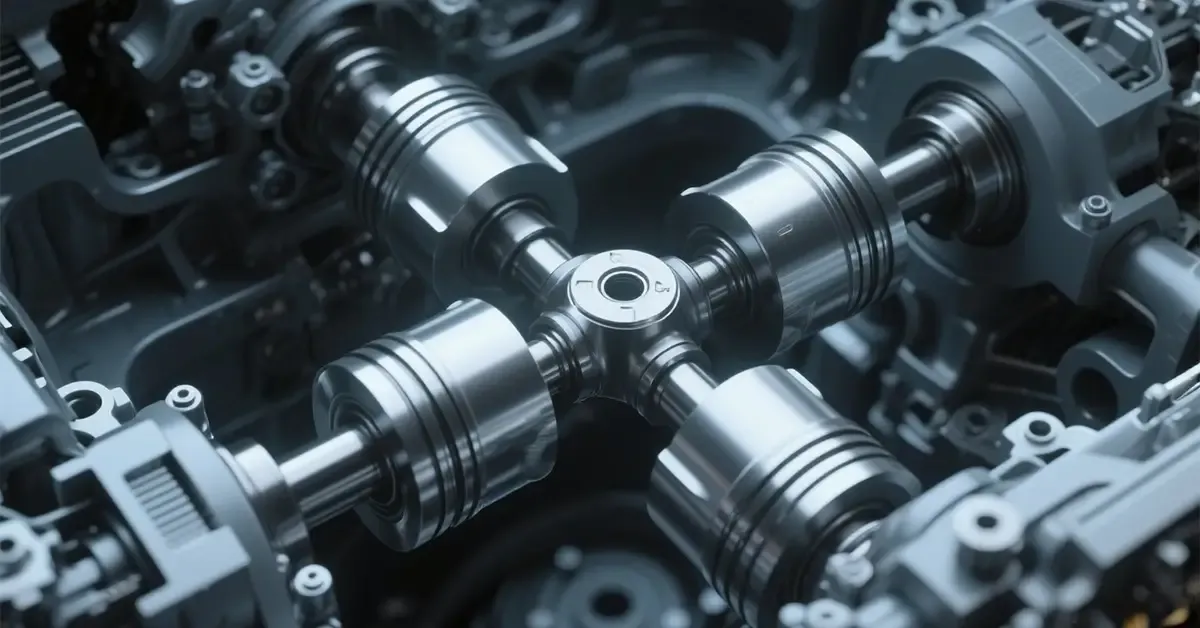
The crankshaft is a long, steel shaft with offset "crankpins" (the parts that connect to pistons via connecting rods). It’s mounted in the engine block with bearings to reduce friction.
What It Does
Here’s the magic: Pistons move up and down (linear motion), but your car’s wheels need to spin (rotational motion). The crankshaft converts that up-down motion into the spinning force that drives the transmission—and ultimately, your wheels.
Think of it like a seesaw: When a piston pushes down, it tilts the crankshaft’s crankpin, turning the entire shaft. All pistons work together to keep the crankshaft spinning smoothly (that’s why V6 or V8 engines feel more powerful than 4-cylinders—more pistons mean more consistent force).
 Why Quality Matters
A bent or cracked crankshaft is a disaster—it causes violent vibrations, engine noise, and even total failure. Linkteco’s crankshaft sets (a top-selling product) are made with forged steel (stronger than cast steel) and precision-machined to ensure perfect alignment. As a manufacturer, we control every step of production—from raw materials to final inspection—so our crankshafts meet ISO standards for reliability.
Cylinder Head
What It Is
The cylinder head is a metal cover that sits on top of the engine block, sealing the cylinders. It contains valves, spark plugs (for gasoline engines), and the combustion chamber (where fuel ignites).
What It Does
- Controls airflow: Intake valves let air/fuel into the cylinder; exhaust valves let waste gases out. The cylinder head ensures these valves open and close at the right time (synced with the piston’s movement).
- Manages combustion: The combustion chamber’s shape (designed by engineers) optimizes fuel burn, boosting efficiency and reducing emissions.
- Cools the engine: Like the block, the cylinder head has coolant channels to prevent overheating.
Common Problems & Linkteco’s Support
A blown head gasket (the seal between the block and head) is a common issue—it causes coolant leaks, overheating, or white smoke from the exhaust. Linkteco offers full gasket sets (including head gaskets) that fit 90% of major vehicle models. Our 107,000+ sq ft warehouse keeps these sets in stock, so wholesale buyers can get delivery in 1–5 days (for in-stock items) or 20–30 days (for custom OEM orders).
If you want to learn more about engine parts beyond these five, check out our guide: What Are the 40 Parts of a Car Engine?
Camshaft
What It Is
The camshaft is a long shaft with egg-shaped "cams" (lobes) that sit in the cylinder head (or engine block, for older engines). It’s driven by the crankshaft via a timing chain or belt.
What It Does
The camshaft is the "traffic cop" for the valves: As it spins, the cams push against valve lifters (or rocker arms), opening the intake and exhaust valves at exactly the right moment. For example: It opens the intake valve when the piston is moving down (intake stroke) and closes it before the piston moves up (compression stroke).
Without a properly working camshaft, valves open/close at the wrong time—causing misfires, reduced power, or even engine damage.
Linkteco’s Camshaft Advantage
Our camshaft kits (another hot-selling product) are engineered for precise timing and durability. We use hardened steel to resist wear, and our R&D team tests each camshaft for compatibility with different engine types (L6, V6, V8, and small-displacement engines). Whether you’re repairing a family car or a high-performance vehicle, our camshafts ensure valves work in perfect sync with the rest of the engine.
How These 5 Components Work Together
Now that you know each part’s job, let’s see how they team up to power your car:
- The camshaft opens the intake valve as the piston moves down (intake stroke), drawing in air/fuel.
- The camshaft closes the intake valve; the piston moves up, compressing the mixture (compression stroke).
- The spark plug ignites the mixture, pushing the piston down (power stroke)—this forces the connecting rod to turn the crankshaft.
- The camshaft opens the exhaust valve as the piston moves up, pushing out exhaust (exhaust stroke).
- The engine block and cylinder head keep everything sealed and cool, ensuring the cycle repeats smoothly (hundreds of times per minute!).
It’s a perfectly timed dance—if one part fails, the whole system breaks down. That’s why choosing high-quality parts (like Linkteco’s) is critical for long engine life.
FAQ
Q1: Which of these five components is the most important?
A: There’s no "most important"—they’re all essential. The engine block is the foundation, but a bad piston or crankshaft will stop the engine just as quickly. Think of them as a chain: The weakest link breaks the whole thing. That said, the engine block is the most expensive to replace, so protecting it (e.g., regular coolant checks) is a top priority.
Q2: Can a car run without one of these parts?
A: No. Even a minor issue (like a stuck valve in the cylinder head) will cause the engine to misfire or stall. For example: A broken camshaft means valves won’t open—so no air/fuel gets in, and no power is made. If you notice symptoms like rough idling, loss of power, or strange noises, have a mechanic check these components immediately.
Q3: Where can I buy reliable parts for these components?
A: As a manufacturer and wholesale supplier, Linkteco offers OEM-quality parts for all five components—engine blocks, pistons, crankshafts, cylinder heads, and camshafts. We serve clients in 30+ countries, with competitive pricing and fast delivery (7–25 days for standard parts). For bulk orders or custom OEM needs, reach out via our Contact Page.
Q4: How do I know if these components need replacement?
Look for these warning signs:
- Engine block: Overheating, coolant leaks, or oil mixing with coolant (a sign of a cracked block).
- Pistons: Blue smoke from the exhaust (oil burning), reduced acceleration, or knocking noises.
- Crankshaft: Violent vibrations, grinding sounds, or difficulty starting the engine.
- Cylinder head: White smoke (coolant burning), overheating, or low coolant levels (blown head gasket).
- Camshaft: Misfires, rough idling, or a "ticking" noise from the engine.
If you notice any of these, consult a mechanic. For bulk buyers, Linkteco offers diagnostic guides to help identify part issues—contact our team via the Contact Page for support.
Conclusion
Understanding the top 5 components of a car engine empowers you to take better care of your vehicle and avoid costly repairs. Whether you’re a driver wanting to speak confidently with mechanics or a distributor needing reliable wholesale parts, these components are the building blocks of engine performance.
At Linkteco, we’ve been manufacturing these critical parts for 15+ years—with a focus on precision, durability, and fast fulfillment. Our 107,000+ sq ft warehouse keeps 85% of products in stock, and our team of 20+ engineers ensures every part meets global quality standards (ISO-certified).
Ready to source high-quality engine parts for your business? Visit our Engine Block Wholesale category page to browse products, or contact our team via Contact Page to discuss custom orders. For more engine part insights, visit our website homepage at LinkTeco Wholesale to explore comprehensive resources, industry guides, and detailed information tailored for wholesalers and mechanics.
Trust Linkteco—your global partner for core engine parts.

Catalog
Quick Link
Support
Contact
Tel: +8619168959101
Email: info@linktecowholesale.com
Add: 12/F, Building 3C, TianAn Cloud Park Phase 1, Bantian, Longgang District, Shenzhen, 518129, China
©2026 LinkTeco All Rights Reserved.