

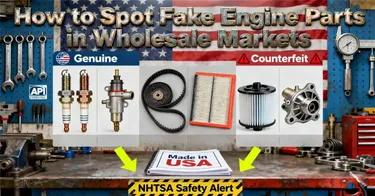
How to Spot Fake Engine Parts in Wholesale Markets
Why Counterfeit Engine Parts Are a Growing Problem
1. Profit Margins for Counterfeiters Are Staggering
- Use scrap metal instead of forged steel for crankshafts.
- Replace heat-resistant rubber with cheap plastic for gaskets.
- Skip quality checks entirely.
2. Global Supply Chains Are Hard to Police
- Hide fake parts in mixed batches of genuine components.
- Use fake “certificates of authenticity” to pass off fakes as real.
- Sell through unregulated online marketplaces (e.g., unvetted Alibaba sellers) where verification is minimal.
3. Wholesale Buyers Often Prioritize Price Over Due Diligence
- Bulk pricing 30–50% below market rate (e.g., $80 for an “OEM crankshaft” that should cost $150).
- “No MOQ” offers (unheard of for genuine manufacturers, who require 50+ units for wholesale).
- Rush shipping promises (to avoid time for inspection).
4. Fake Parts Are Getting Harder to Distinguish
Signs an Engine Part Might Be Fake (packaging, labeling, weight, material)
1. Packaging: The First Red Flag
- Printing quality: Blurry logos, misspelled words, or uneven ink (e.g., “Linkteco” misspelled as “Linkteko” or “Linkeco”). Genuine packaging uses laser printing with sharp edges and consistent color.
- Material quality: Thin, flimsy cardboard or plastic (genuine packaging uses thick, rigid materials to resist damage). Fake oil filter boxes, for example, may tear easily when opened.
- Missing or fake features: Genuine parts have unique anti-counterfeit measures—Linkteco uses:
Holographic stickers with dynamic patterns (tilt the sticker, and it shows “LT” logos that shift color).
QR codes linked to our official verification page (fake QR codes either don’t scan or link to generic websites).
Serial numbers printed in UV ink (visible only with a black light—fake parts use regular ink).
- Inconsistent branding: Mixed logos (e.g., a “Toyota OEM” piston with a Honda logo on the inside) or generic terms like “Fits All Models” (genuine parts specify exact makes/models, e.g., “Fits Ford F-150 2018–2023”).
2. Labeling: Details That Counterfeiters Miss
- OEM part number mismatch: Every genuine part has a unique OEM number (e.g., Linkteco’s piston for Toyota Camry has OEM cross-reference “13101-0A010”). Fake parts may:
Use a random string of numbers (e.g., “PST-001” with no OEM link).
Copy an OEM number but print it incorrectly (e.g., “13101-0A011” instead of “13101-0A010”).
You can verify OEM numbers via the vehicle manufacturer’s (e.g., Toyota’s parts catalog) or Linkteco’s Automotive Engine PartsGlossary.
- Missing certification marks: Genuine parts have industry certifications printed on labels—look for:
IATF 16949 (automotive quality standard).
ISO 9001 (general quality standard).
Regional marks (e.g., “DOT” for U.S., “CE” for EU).
- Vague or incorrect specs: Genuine labels list detailed specs (e.g., “Piston material: Forged aluminum alloy, Bore size: 86mm”). Fake labels use generic terms like “High-Quality Metal” or “Fits Most Engines.”
3. Physical Characteristics: Weight, Material, and Craftsmanship
- Weight discrepancy: Genuine engine parts have strict weight tolerances. For example:
Linkteco’s 4-cylinder piston weighs 450g ±5g.
A fake piston may weigh 380g (too light, using cheap aluminum) or 520g (too heavy, using scrap metal).
- Material defects: Inspect the part for:
Surface blemishes: Scratches, rust, or uneven casting (genuine parts have smooth, polished surfaces).
Poor fit: Fake gaskets may have uneven edges (causing leaks) or be too thick/thin (failing to seal).
Magnetic test: For steel parts (e.g., crankshafts), a magnet should stick firmly—fake parts made of aluminum with a steel coating will have weak magnetism.
- Craftsmanship flaws: Look for signs of shoddy manufacturing:
Loose or missing hardware (e.g., fake valve covers with missing bolts).
Uneven welds (genuine exhaust manifolds have clean, consistent welds).
Burrs or sharp edges (genuine parts are deburred to prevent injury and leaks).
4. Documentation: Fake Certificates vs. Genuine Paperwork
- Missing “Certificate of Conformance (CoC)”: A CoC is a legal document proving the part meets OEM specs. Genuine suppliers like Linkteco include a CoC with every bulk order, signed by a quality control manager and including:
Batch number (traceable to manufacturing date and facility).
Test results (e.g., pressure testing for head gaskets).
OEM cross-references.
- Inconsistent batch numbers: Every genuine part in a bulk order has the same batch number (e.g., “LT-2024-03-PST” for Linkteco’s March 2024 piston batch). Fake parts may have:
No batch numbers.
Random, mismatched numbers (e.g., “PST-001” on one piston, “PST-056” on another in the same order).
- Unverifiable contact info: Genuine supplier documents list a physical address, phone number, and email for quality complaints. Fake documents use:
Generic emails (e.g., “sales@gmail.com” instead of “info@linktecowholesale.com”).
Non-existent addresses (use Google Maps to verify—fake addresses often lead to residential homes or empty lots).
Risks of Using Counterfeit Auto Parts in Bulk Orders
1. Safety Hazards for End Users
- A fake head gasket may blow while a driver is on the highway, causing the engine to overheat and seize (leading to a crash).
- A fake crankshaft made of scrap metal can snap at high RPM, sending shrapnel through the engine bay (risking fires or injury).
2. Costly Rework and Warranty Claims
- Labor costs: A repair shop that installs a fake water pump will have to redo the work for free (losing 2–3 hours of labor, worth $150–$300).
- Replacement parts: You’ll need to send genuine parts to fix the issue, doubling your parts cost.
- Legal fees: If a counterfeit part causes property damage (e.g., an engine fire), the end user may sue your business. A 2023 case in California saw a repair shop ordered to pay $250,000 in damages after a fake piston caused a vehicle fire.
3. Damage to Your Business Reputation
- A fleet manager who uses fake oil filters and sees 5 trucks break down will never buy from you again.
- Negative reviews (e.g., “This distributor sold me fake gaskets—avoid!”) on platforms like Yelp or Auto Repair Network can drive away 40% of potential clients, according to a 2023 survey.
4. Regulatory Penalties
- In the U.S., the Trademark Counterfeiting Act imposes fines of up to $2 million and 10 years in prison for intentional sales of fakes.
- In the EU, the Intellectual Property Rights Enforcement Directive (IPRED) allows customs to seize counterfeit shipments and fine importers.
How Wholesalers and Repair Shops Can Protect Themselves
1. Vet Suppliers Rigorously (Don’t Just Buy Online)
- Check for manufacturer authorization: Only buy from suppliers who are officially authorized by brands (e.g., Linkteco’s authorized distributors have a “Verified Partner” badge on our homepage).
- Visit or audit the supplier’s facility: For large orders (100+ units), ask to tour the supplier’s warehouse or factory. Counterfeiters often refuse in-person visits or provide vague excuses (“Our facility is closed for maintenance”).
- Request references: Ask for 3–5 current B2B clients (e.g., other repair shops or distributors). Call these references and ask: “Have you ever received counterfeit parts from this supplier?”
- Avoid unregulated marketplaces: Don’t buy from random sellers on Alibaba, eBay, or Facebook Marketplace—stick to official brand websites or authorized distributors.
2. Test Samples Before Placing Bulk Orders
- Physical checks: Weigh the sample, inspect materials, and compare it to a known genuine part (e.g., a part you bought directly from the OEM).
- Third-party testing: For high-value parts (e.g., engine blocks, crankshafts), send a sample to a lab like SGS or Intertek for material analysis. A $200 test can save you $10,000 in fake parts.
- Field testing: Install the sample in a test vehicle (or a non-critical fleet vehicle) and monitor performance for 30–60 days. A fake piston will show signs of wear (e.g., increased oil consumption) within this period.
3. Verify Documentation and Traceability
- Certificate of Conformance (CoC): Cross-check the batch number on the CoC with the batch number on the parts (they should match). Call the supplier’s quality control team to confirm the CoC is genuine.
- OEM cross-reference sheet: Ensure every part has a valid OEM number (use the manufacturer’s to verify).
- Shipping documents: Genuine suppliers use reputable carriers (DHL, FedEx, Maersk) and include detailed commercial invoices with “Engine Parts” listed clearly. Fake suppliers often use cheap carriers (e.g., local couriers) and vague invoices (e.g., “General Merchandise”).
4. Build a “Genuine Parts” Process for Your Team
- Create a checklist: Make a one-page guide with photos of genuine vs. fake parts (e.g., Linkteco’s holographic sticker vs. a fake sticker).
- Hold monthly training: Review recent counterfeit trends (e.g., new fake packaging styles) and test staff with “mystery parts” (mix genuine and fake parts and ask them to identify fakes).
- Assign a quality control lead: Designate one employee to inspect every bulk shipment—focusing on packaging, labels, and physical characteristics.
5. Report Counterfeits to Authorities
- Document everything: Take photos of the parts, packaging, and documents. Save emails and invoices from the supplier.
- Report to customs: In the U.S., file a report with CBP via their e-Allegations portal. In the EU, contact your national intellectual property office.
- Notify the brand: If the parts are fake OEM, inform the vehicle manufacturer (e.g., Toyota, Ford)—they may help with legal action.
- Warn other buyers: Share your experience on industry forums (e.g., Auto Parts Insider) to protect other businesses.
FAQ
1. Are counterfeit engine parts common in China?
- A physical factory (not just an office).
- IATF 16949 certification.
- Authorized partnerships with global brands.
2. How do I verify the authenticity of engine parts in bulk?
- Check the supplier’s credentials: Confirm they’re authorized by the brand (e.g., Linkteco’s verified partners) and have valid certifications (IATF 16949, ISO 9001).
- Inspect the part and packaging: Use the checks in Section 2 (holograms, OEM numbers, weight, material) to spot red flags.
- Verify with the manufacturer: For Linkteco parts, scan the QR code on the packaging to go to our verification page—enter the serial number to see if it’s registered in our system. For OEM parts, call the vehicle manufacturer’s parts department and provide the OEM number to confirm.
3. Are counterfeit parts always cheaper than genuine ones?
4. Can I get a refund if I accidentally buy counterfeit parts?
- Reputable suppliers: If a genuine supplier (like Linkteco) accidentally sends a defective part (not a fake), they’ll issue a full refund and send replacement parts for free.
- Counterfeit suppliers: They’ll likely ghost you or deny the parts are fake. Your best bet is to dispute the charge with your bank (if you paid via credit card) and report them to the authorities.
Conclusion
- Holographic anti-counterfeit stickers with QR code verification.
- A signed Certificate of Conformance (CoC) with traceable batch numbers.
- Free samples to test before bulk orders.
- 24/7 quality support to answer authenticity questions.
- Browse our catalog: Visit the Linkteco Homepage to view our pistons, gaskets, crankshafts, and more—all certified and traceable.
- Request a sample: Use our Contact Page to order a free sample and test our quality for yourself.
- Talk to our team: Our quality control experts can walk you through our anti-counterfeiting processes and help you build a fake-free sourcing strategy.

Contact
©2026 LinkTeco All Rights Reserved.