

What Are the 40 Parts of a Car Engine?
Overview of a Car Engine and Its Role
Full List of the 40 Engine Parts (With In-Depth Descriptions & Buyer Insights)
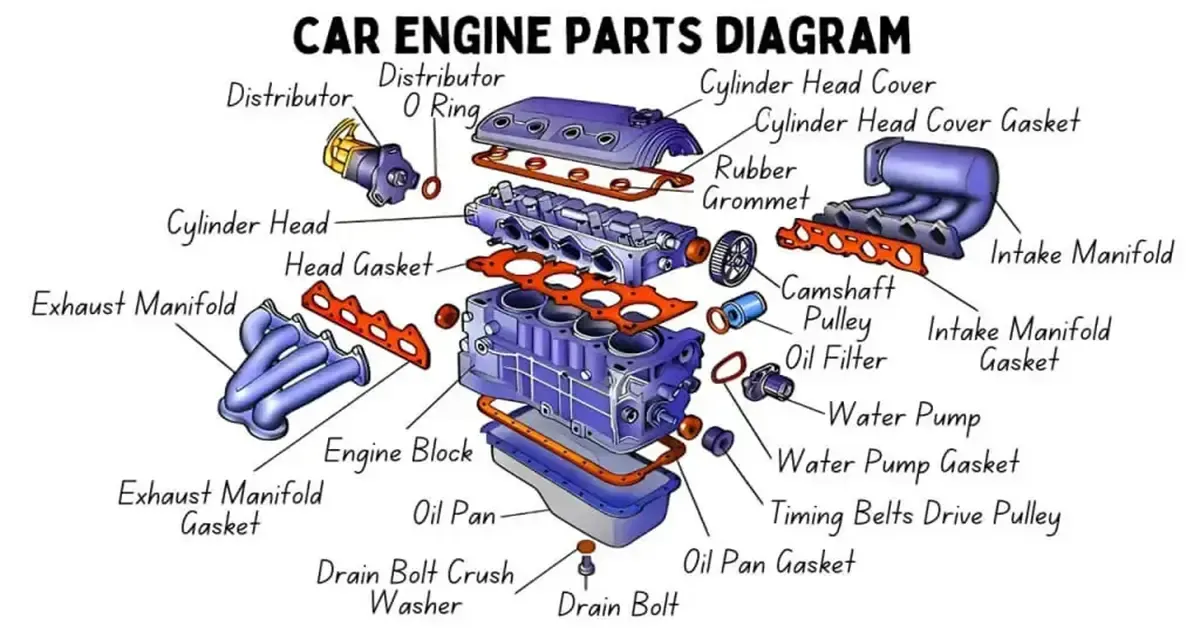
An internal combustion engine is a complex system of interdependent parts, each with a unique function. Below, we break down 40 critical engine components, explaining their role in operation, common variations, failure patterns, and what wholesale buyers need to know when sourcing them.
1. Engine Block
The block is the structural core of the engine, typically cast from iron or aluminum alloy. It contains the cylinders where combustion takes place, along with coolant jackets and oil passages for temperature control and lubrication. The block must withstand extreme pressures and heat over millions of cycles.
Buyer Insight: Blocks are heavy-duty, high-value items with low replacement turnover. Most demand comes from engine remanufacturers and OEM service networks. Shipping costs are high, so buyers often consolidate orders.
2. Cylinder Head
Bolted to the block, the head contains combustion chambers, intake/exhaust ports, and—on OHC designs—the camshaft(s). Precision machining ensures proper compression and valve seating. Poor design or failure leads to power loss and overheating.
Buyer Insight: Cylinder heads are medium-turnover in wholesale. Demand is strong in regions with overheating issues or poor fuel quality. OEM machining tolerances are critical.
3. Pistons
Pistons move up and down inside cylinders, compressing air-fuel and transmitting combustion energy to the crankshaft. Modern pistons use lightweight alloys, often with ceramic or molybdenum coatings for heat and friction resistance.
Buyer Insight: High-turnover wholesale part. Always included in rebuild kits. Both OEM replacements and performance forged pistons sell well.
4. Piston Rings
Rings fit tightly around pistons, sealing combustion chambers and regulating oil. Without them, engines lose compression and burn oil. Typically, three rings per piston: two compression, one oil control.
Buyer Insight: One of the fastest-moving items in wholesale. Always ordered in bulk. OEM-spec material hardness and coatings affect longevity.
5. Connecting Rods
These rods link pistons to the crankshaft, transferring combustion energy into rotation. Forged rods are used in performance or heavy-duty applications, while cast rods suffice for daily driving.
Buyer Insight: Steady wholesale demand. Buyers often ask for forged rods for tuning and heavy-load markets (diesel, racing).
6. Crankshaft
The crankshaft converts piston motion into rotation. It must be balanced to reduce vibrations and runs on the main bearings. Heat treatment and precision machining are essential for durability.
Buyer Insight: High-value, lower-turnover part. Demand mainly from rebuilders. OEM machining tolerances must be guaranteed.
7. Camshaft
Controls valve timing by opening/closing valves at precise intervals. Different camshaft profiles affect torque, horsepower, and fuel efficiency. Modern engines may use variable valve timing (VVT) systems.
Buyer Insight: Popular in aftermarket tuning. OEM camshafts are a medium-volume wholesale part, while performance cams target niche buyers.
8. Timing Belt / Chain
This ensures synchronization between the crankshaft and camshaft. Belts are quieter but need replacement every 60,000–100,000 miles. Chains last longer but can stretch or wear.
Buyer Insight: Extremely high turnover. Timing kits (belt/chain + tensioners + water pump) are among the best-selling wholesale items.
9. Valves
Intake valves bring in fuel-air, and exhaust valves expel gases. They must endure high heat and pressure while sealing combustion chambers. Titanium or sodium-filled valves exist for performance.
Buyer Insight: Steady demand in wholesale. Often sold in full engine sets. OEM-grade material composition matters.
10. Valve Springs
Keep valves sealed until opened by cam action, then snap them back shut. Fatigue failure causes valve float, leading to engine misfire.
Buyer Insight: Often bundled in cylinder head kits. High demand in bulk for rebuilders.
11. Rocker Arms
Act as levers transferring camshaft motion to valves. Roller rocker designs reduce friction and improve longevity.
Buyer Insight: Moderate wholesale turnover. Strong demand from performance tuning shops.
12. Lifters (Tappets)
Hydraulic or solid components between the camshaft and valves. Hydraulic lifters self-adjust to reduce noise, while solid lifters need manual clearance adjustments.
Buyer Insight: Wholesale demand is medium, but buyers want lifters with high wear resistance to reduce warranty issues.
13. Cylinder Liners
Protect block walls from wear, especially in heavy-duty diesel engines. Wet liners allow coolant flow; dry liners press-fit into blocks.
Buyer Insight: High wholesale demand in diesel markets (trucks, construction, agriculture). OEM liners are mandatory for longevity.
14. Head Gasket
Seals block and head, containing combustion gases while keeping coolant and oil separate. Failure causes overheating and coolant leaks.
Buyer Insight: Very high turnover. Head gaskets and gasket sets are top sellers in wholesale markets worldwide.
15. Oil Pan
A reservoir holding lubricating oil. Located at the bottom of the block, it can be damaged by road debris.
Buyer Insight: Medium turnover. Often replaced after impact damage. Moderate demand in wholesale.
16. Oil Pump
Circulates oil through bearings, lifters, and camshafts. A weak pump starves the engine of lubrication, leading to catastrophic failure.
Buyer Insight: Mid-to-high wholesale demand. Often bundled with lubrication system kits.
17. Oil Filter
Traps dirt, metal shavings, and contaminants in circulating oil. Needs frequent replacement.
Buyer Insight: One of the highest-turnover wholesale consumables. Buyers order by the pallet.
18. Main Bearings
Support crankshaft rotation inside the block. Must withstand heavy loads while minimizing friction.
Buyer Insight: High demand as part of rebuild kits. OEM precision is key.
19. Rod Bearings
Sit between connecting rods and crank journals. Handle constant reciprocating stress.
Buyer Insight: Very common bulk purchase. A staple of rebuild and overhaul kits.
20. Flywheel
Heavy disc storing rotational energy, ensuring smooth engine operation. Also engages with clutch in manual vehicles.
Buyer Insight: Low-to-medium wholesale demand. Mainly replaced in clutch rebuild jobs.
21. Harmonic Balancer
Absorbs vibration from crankshaft rotation. Without it, crankshaft fatigue and failure can occur.
Buyer Insight: Mid-demand in wholesale. Often ordered together with crankshaft components.
22. Intake Manifold
Distributes air evenly to all cylinders. Modern designs optimize airflow for efficiency and performance.
Buyer Insight: Strong aftermarket demand for performance upgrades. OEM units sell steadily in wholesale.
23. Throttle Body
Regulates airflow entering the engine. Modern versions are electronically controlled (drive-by-wire).
Buyer Insight: Medium turnover. Steady demand in wholesale markets for late-model vehicles.
24. Air Filter
Prevents dirt and dust from entering the combustion chamber. Needs replacement every 10,000–20,000 miles.
Buyer Insight: One of the top-selling wholesale parts. High-volume, low-cost consumable.
25. Fuel Pump
Delivers fuel from the tank to the injectors. Mechanical in older cars, electric in modern ones.
Buyer Insight: High wholesale demand. Buyers often stock electric fuel pumps in bulk.
26. Fuel Injectors
Atomize fuel into a fine mist for combustion. Can be port-injected or direct-injected.
Buyer Insight: Medium-high demand. OEM injectors are expensive, so remanufactured injectors sell well in wholesale.
27. Spark Plugs
Ignite the air-fuel mixture in gasoline engines. Need regular replacement.
Buyer Insight: One of the fastest-turnover items in wholesale. Ordered in bulk by garages and distributors.
28. Glow Plugs
Used in diesel engines to preheat air in cylinders for cold starting.
Buyer Insight: Strong demand in diesel-heavy and cold-weather regions. Always sold in bulk.
29. Ignition Coil
Boosts voltage for spark plug ignition. Failure is common and causes misfires.
Buyer Insight: High wholesale turnover. Strong demand for both OEM and aftermarket coils.
30. Distributor (older engines)
Directs spark timing to each cylinder. Replaced by coil-on-plug systems in modern engines.
Buyer Insight: Low demand but niche market for older engines and restorers.
31. Sensors
Includes oxygen, MAF, MAP, knock, crankshaft, and coolant sensors. Feed real-time data to the ECU.
Buyer Insight: High-turnover wholesale products. Sensors fail often and are frequently replaced.
32. ECU (Engine Control Unit)
The digital brain of the engine manages fuel injection, ignition timing, and emissions.
Buyer Insight: High-value, medium turnover. Wholesale demand is strongest in OEM-specific supply chains.
33. Radiator
Cools the engine by dissipating heat from circulating coolant.
Buyer Insight: Steady demand. Radiators are bulky, so logistics cost management is important in wholesale.
34. Water Pump
Keeps coolant flowing through the block, head, and radiator. Failure leads to overheating.
Buyer Insight: Very high wholesale turnover. Often bundled with timing belt kits.
35. Thermostat
Opens/closes to regulate coolant temperature. Prevents overheating or underheating.
Buyer Insight: Low-cost, high-volume consumables. Always ordered in bulk.
36. Cooling Fan
Mounted on the radiator or engine, it assists cooling at low speeds. It can be belt-driven or electric.
Buyer Insight: Medium turnover. Demand depends on climate and fleet use.
37. Turbocharger
Uses exhaust gases to spin a turbine, forcing more air into cylinders. Increases power output significantly.
Buyer Insight: Medium turnover, but high-value item. Strong demand from both OEM and performance aftermarket buyers.
38. Intercooler
Cools compressed air from the turbo before it enters the cylinders, improving efficiency.
Buyer Insight: Mid-volume, high-value item. Popular in performance markets and diesel fleets.
39. Exhaust Manifold
Collects exhaust gases from cylinders and routes them to the exhaust system. Subject to cracking under high heat.
Buyer Insight: Steady wholesale demand. Diesel fleet operators are frequent buyers.
40. PCV Valve (Positive Crankcase Ventilation)
Recycles unburned gases from the crankcase back into the intake to reduce emissions.
Buyer Insight: Very high-turnover consumable. Low-cost, always ordered in bulk alongside filters.
Key Functions of Major Engine Components
Engine Block and Cylinder Head
Pistons, Connecting Rods, and Crankshaft
Camshaft and Valves
Fuel System Components
Cooling and Lubrication Systems
Why Understanding Engine Parts Matters
Whether you’re fixing cars or sourcing parts in bulk, knowing engine components inside out saves time, money, and headaches. Below’s how it helps—broken down for both repair pros and wholesale buyers:
For Repair Professionals (DIY Mechanics / Auto Shops)
Faster, Accurate Diagnoses
No more guessing why an engine stalls or overheats. If you know a faulty water pump stops coolant flow (not a broken thermostat), you skip unnecessary part swaps—cutting repair time by 30% on average.Avoid Costly Mistakes
Installing the wrong oil filter (e.g., a passenger car filter on a heavy-duty truck) can cause oil leaks or engine seizure. Understanding part specs (size, pressure rating) prevents these $1,000+ repair blunders.Build Trust with Customers
Explaining “your camshaft lobes are worn (not just a ‘noisy engine’)” shows expertise. Customers are more likely to return when they understand the fix—boosting repeat business.
For Wholesale Buyers (Distributors / Repair Chains)
Source the Right Parts (First Try)
Knowing that diesel engines need heat-resistant exhaust manifolds (vs. gasoline engines) means you don’t order incompatible stock. Linkteco’s Pistons Wholesale page, for example, lists piston materials (aluminum vs. forged steel) by engine type—so you pick parts that fit 100% of the time.Negotiate Better Deals
When you can specify “I need 500 crankshafts with forged steel (not cast iron) for Ford F-150s,” suppliers can’t upsell you on overpriced or low-quality parts. You get exact specs at competitive rates.Manage Inventory Smarter
Understanding which parts fail most (e.g., oil filters need restocking every 2 weeks, timing belts every 2 months) helps you avoid stockouts or dead stock. Linkteco’s 85% in-stock rate for core parts (engine blocks, pistons) also aligns with these demand patterns.Serve Customers Better
If a repair shop asks for “a cylinder head for a Toyota Corolla 2020,” you can confirm fitment instantly (no waiting to check specs). Faster order fulfillment keeps your clients happy—and your business growing.
A Win-Win for Everyone
At Linkteco (your wholesale engine parts supplier), we design our parts and resources (like this guide) to support both groups. Our R&D team even shares part failure data with buyers—helping you stock what your clients actually need.
FAQ (Common Questions About Car Engine Parts)
1. If an engine has 40 key parts, why do some sources say engines have hundreds of parts?
2. Which of the 40 engine parts is the most critical—can I drive with one broken?
- Engine block (cracks leak coolant/oil, killing lubrication/cooling)
- Crankshaft (bent/worn means no rotational motion to drive wheels)
- Pistons (seized or broken pistons can destroy cylinders)
3. How much do common engine parts cost? (For DIYers and wholesale buyers)
Costs for engine components vary depending on part type, brand, and whether you purchase retail or wholesale. Here’s an updated breakdown:
Retail Pricing (for Do-It-Yourself Consumers):
Oil filters: $15 – $40 each, depending on brand and vehicle compatibility.
Water pumps: $70 – $200 per unit, depending on engine type.
Pistons: $100 – $350 each, varying by material (aluminum vs. forged) and vehicle application.
Timing belts/kits: $50 – $150 for belts alone; $120 – $250 for complete kits including tensioners and pulleys.
Wholesale Pricing (for Distributors and Repair Shops):
Linkteco offers volume discounts that can reduce costs by 30% to 50%. Example pricing:
Oil filters: Bulk packs of 100 at ~$6–$8 per unit.
Piston kits: Sets of 4 pistons with rings priced at ~$130–$160 per kit.
Engine blocks: $350 – $900 each, depending on the engine model and material.
Timing kits (belt + tensioner + water pump): ~$150 – $250 per kit, depending on engine size.
Pro Tip: For wholesale orders, ask about Linkteco’s custom OEM bundles, such as combining timing belts, tensioners, and water pumps. These bundles are popular among repair chains and help maximize cost savings while simplifying inventory management.
4. How do I know if an engine part is high-quality? (Avoiding cheap knockoffs)
- Material specs: Engine blocks should be cast iron (heavy-duty) or T6 aluminum (lightweight); pistons need molybdenum coating (reduces friction).
- Testing certifications: Look for ISO 9001 (quality management) or IATF 16949 (automotive-specific) certifications—Linkteco tests every batch (e.g., crankshafts go through 50,000 cycle fatigue tests).
- Fitment guarantee: Cheap parts have loose tolerances (e.g., a 0.5mm off cylinder head causes leaks). Linkteco’s parts match OEM dimensions (±0.001mm) for perfect fits.
5. Do engine parts vary by car brand? (Can I use a Toyota piston in a Ford?)
- Cylinder size (Ford F-150’s 5.0L V8 has larger pistons than Toyota Camry’s 2.5L 4-cyl)
- Mounting points (water pumps for Honda use 4 bolts; GM uses 3)
- Material needs (diesel engines need heat-resistant exhaust manifolds vs. gasoline).
6. How often should I replace common engine parts? (Maintenance tips)
- Oil filters: Every 5,000–7,500 miles
- Timing belt/chain: 60,000–100,000 miles (check your car’s manual)
- Water pump: 100,000–150,000 miles (replace with timing belt to save labor)
- Spark plugs (gasoline engines): 30,000–100,000 miles (depends on platinum/iridium type).
Conclusion
A car engine may seem complex, but it can be broken down into 40 key parts, each with a unique role in power generation, lubrication, cooling, or emissions control.
For drivers, this knowledge helps with maintenance and communication with mechanics. For B2B buyers, it’s a blueprint for stocking the right parts that are always in demand.
At Linkteco, we don’t just list these parts — we design, manufacture, and supply them at wholesale scale. From pistons and crankshafts to sensors and gaskets, we provide OEM-quality components to global buyers.
Contact Linkteco today to request a wholesale catalog or get a bulk quotation.

Contact
©2026 LinkTeco All Rights Reserved.