

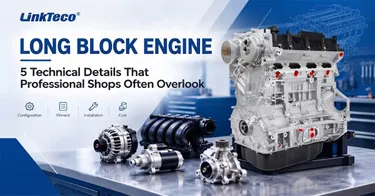
Buying a Long Block Engine? 5 Technical Details Shops Often Overlook
Summary
Buying a Long Block Engine is about more than matching the vehicle application and comparing the quoted price. The actual configuration, included components, engine identification, installation requirements, and core terms can all affect fitment, installation time, and the final replacement cost.
For repair shops, engine rebuilders, and B2B buyers, the safest approach is to verify the exact Long Block configuration and bill of materials before placing an order. Confirm what is included, what must be transferred or replaced, how the engine is identified, and what the supplier requires for installation, warranty, and core return.
What Is a Long Block Engine?
To understand what a Long Block Engine includes, it helps to first look at how engine assemblies are commonly packaged in the aftermarket. Terms such as short block, long block, and complete engine describe different levels of assembly, but the exact component list can vary by supplier and engine application. For B2B buyers, the product name alone should never replace a detailed parts list or bill of materials.
Long Block Engine vs. Short Block
A short block is the lower section of an engine assembly. It generally consists of the cylinder block and the main rotating assembly, including:
- Cylinder Block: The main casting that houses the cylinders, crankcase, and related internal passages.
- Crankshaft: The primary rotating shaft that converts the pistons' reciprocating motion into rotational movement.
- Pistons & Connecting Rods: The components that transfer combustion force to the crankshaft.
- Bearings & Piston Rings: Internal components that support the rotating assembly and provide the required sealing within the cylinders.
A short block does not include the cylinder head assembly. Depending on the application, the existing cylinder heads and related valvetrain components may need to be transferred, rebuilt, or supplied separately.
What Is Included in a Long Block Engine?
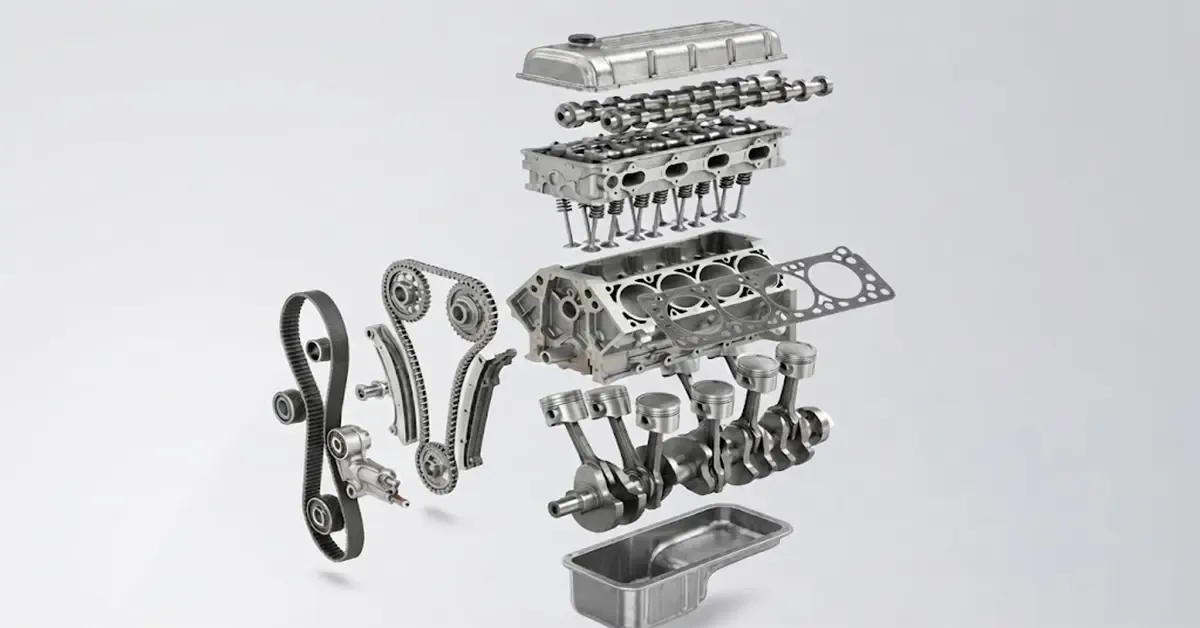
A Long Block Engine generally builds on the short block by adding the cylinder head assembly and key valvetrain components. Depending on the engine design and supplier configuration, this may include:
- Cylinder Head(s): The upper engine castings that contain the combustion chambers and valve passages.
- Camshaft(s): Components that control valve timing on applications where the camshaft is part of the long block assembly.
- Valvetrain Components: Such as valves, springs, rocker arms, and related valve-gear components.
However, there is no single universal Long Block configuration. Some assemblies may include additional components, while others may require parts such as timing components, valve covers, oil pans, or other hardware to be supplied or transferred separately.
For that reason, shops should confirm the exact included components and bill of materials before placing an order.
Long Block vs. Complete Engine
A long block is more complete than a short block, but it is not necessarily a complete, ready-to-run engine.
A complete engine package may include additional components that are commonly supplied separately from a long block, such as:
- Alternator and Starter
- A/C Compressor and Other External Accessories
- Intake and Exhaust Manifolds
- Fuel System Components, such as injectors, fuel rails, or pumps
- ECU, Sensors, and Wiring Harnesses
- Cooling and Lubrication Components, depending on the package
The exact exclusions vary by engine application and supplier. Components such as the water pump, oil pan, front cover, or timing components may be included in some configurations and excluded from others.
For B2B buyers, the key is to confirm what is included, what must be transferred from the original engine, and what needs to be purchased separately before the order is finalized.
Long Block vs. Short Block vs. Complete Engine
When sourcing replacement engines, shops and procurement teams commonly encounter three engine assembly configurations: short blocks, long blocks, and complete engines. Although the terminology is widely used in the aftermarket, the exact components included in each configuration can vary by engine application and supplier. Understanding the basic differences helps buyers avoid missing parts, installation delays, and unexpected additional costs.
The table below provides a practical comparison of the typical configuration boundaries:
| Configuration | Main Mechanical Assembly | Cylinder Head | Valvetrain | External Accessories |
|---|---|---|---|---|
| Short Block | Lower engine assembly | No | No | Typically not included |
| Long Block | More complete mechanical assembly | Usually included | Usually included | Typically not included |
| Complete Engine | More fully assembled engine package | Yes | Yes | May vary by package |
Terminology Note: Engine terminology and included components can vary among manufacturers, remanufacturers, and suppliers. Always confirm the exact configuration and bill of materials before placing an order.
5 Technical Details Shops Often Overlook When Buying a Long Block Engine
When sourcing a Long Block Engine, the purchase price is only part of the equation. The exact engine configuration, included components, installation requirements, and core terms can all affect the final cost and the time required to complete the job.
For repair shops, engine rebuilders, and purchasing teams, these details are easy to overlook during the initial quote comparison. Before placing an order, verify the following five areas.
"Long Block" Does Not Always Mean the Same Configuration
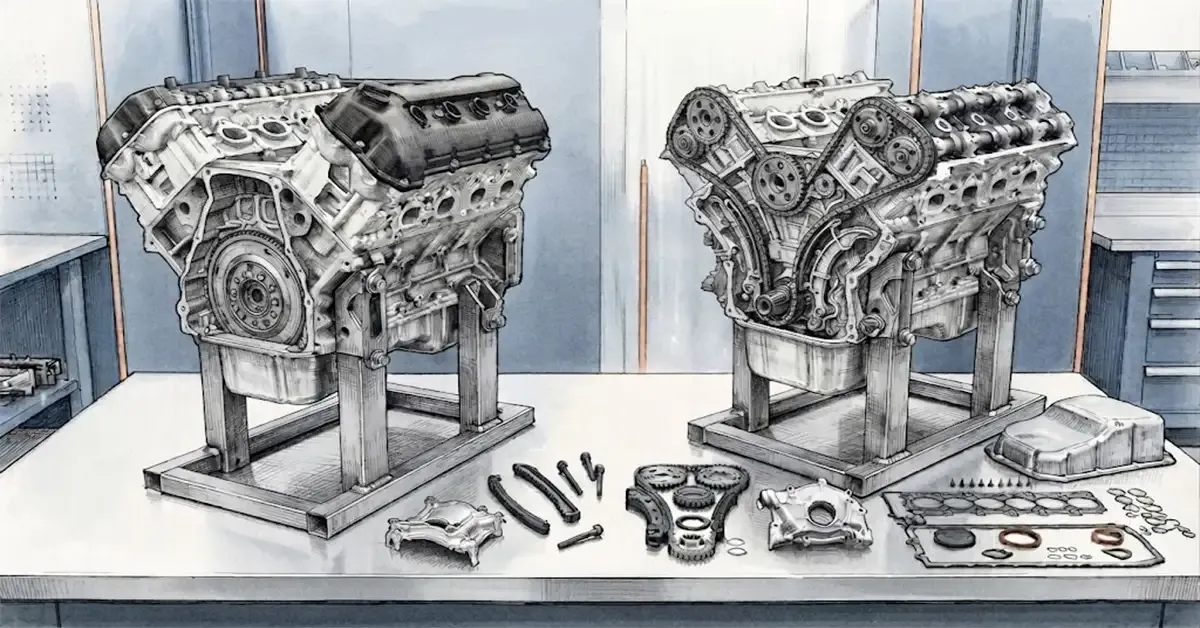
A supplier may list an engine as a Bare Long Block, Long Block Assembly, or Complete Long Block. These terms may sound similar, but the actual bill of materials can be different.
Depending on the engine application and supplier configuration, components such as the following may be included or supplied separately:
- Camshaft(s)
- Rocker arms
- Valves and valve springs
- Timing components
- Oil pan
- Front cover
- Oil pump
The same applies to other components that may vary from one engine program to another.
Procurement Rule: Do not rely on the product name alone. Review the exact included components or bill of materials before issuing a purchase order.
This is particularly important when comparing Long Block Engines from different suppliers. Two assemblies described as a “Long Block” may not have the same configuration.
Year, Make, and Model May Not Be Enough to Match the Engine
Year, make, and model are useful starting points, but they may not provide enough information to identify the correct Long Block Engine.
Production changes, engine-code variations, different vehicle configurations, and application-specific components can create differences within the same model year.
Before ordering, verify the available engine identification information, including:
- VIN (Vehicle Identification Number)
- Engine code
- Casting number
- Production date or build information
- Exact engine configuration
- Reluctor or trigger wheel configuration, where applicable
- Sensor locations and connection points
A vehicle application that appears to match on paper can still have a different engine configuration.
Core Takeaway: Treat year, make, and model as the starting point for an engine match, not the only criteria. Cross-reference the VIN, engine code, casting information, and other application-specific details before finalizing the order.
Know Which Components Are Included, Reused, or Replaced
A Long Block Engine provides the main mechanical assembly, but it does not necessarily include every part required to complete the installation.
Before the job begins, divide the required components into three categories.
Included with the Long Block
Depending on the configuration, this may include the cylinder block, cylinder heads, crankshaft and piston assembly, camshaft or valvetrain components, and other pre-assembled internal parts.
Transferred From the Original Engine
Some external components may be reused when they are in good condition and compatible with the replacement engine. Depending on the application, these can include certain brackets, pulleys, covers, or manifolds.
Replaced or Supplied Separately
Depending on the engine failure, component condition, and supplier requirements, the installation may call for replacement parts such as:
- Oil pump
- Water pump
- Timing components
- Gaskets and seals
- Sensors
- Intake and exhaust components
- Valve covers
- Flywheel or flexplate
Not every component needs to be replaced in every installation, and not every original component should automatically be reused. The decision should be based on the cause of failure, component condition, engine compatibility, and supplier installation requirements.
Confirming these categories before the vehicle enters the installation bay helps prevent missing parts and unexpected delays.
Installation and Break-In Requirements Can Affect Warranty Coverage
Installing the Long Block is only part of the replacement process. Some suppliers and remanufacturers specify particular requirements for lubrication, startup, break-in, torque procedures, and documentation as part of their warranty terms.
Depending on the engine and supplier, the installation instructions may cover:
- Priming the oiling system before initial startup
- Following the specified lubrication procedure
- Using the required oil viscosity and specification
- Following any stated break-in procedure
- Performing post-installation inspections
- Following specified torque sequences and fastener replacement requirements
- Keeping installation and maintenance records
Break-in requirements are not necessarily the same for every engine, and some suppliers may not require the same procedures or documentation.
For that reason, review the installation instructions and warranty terms for the specific engine before installation begins. Failure to follow stated requirements may affect warranty coverage or the handling of a future warranty claim.
Note: Installation and break-in procedures vary by engine design and supplier. Always follow the documentation provided with the specific Long Block Engine.
Core Charges and Return Conditions Can Change the Real Cost
For B2B engine buyers, the advertised Long Block price does not always represent the final cost of the purchase.
Some suppliers require a core charge that can be credited back when the old engine or core meets the specified return conditions. The amount ultimately paid can therefore depend on the engine price, freight, required components, and whether the returned core qualifies for the expected credit.
Before placing the order, confirm:
- Core charge amount
- Required core condition
- Acceptable and unacceptable core damage
- Missing-component requirements
- Core return freight
- Inspection and credit procedures
- Timing of the core credit
- Any applicable deductions or fees
Core requirements can vary by supplier and engine program. Conditions may address issues such as cracked blocks, severe structural damage, damaged crankshafts, or missing major components.
Calculate the Real Procurement Cost
For purchasing and budgeting purposes, it helps to separate the upfront cash requirement from the net cost after any eligible core credit.
Upfront Cash Requirement:
Engine Price + Freight + Core Charge + Required Components + Installation-Related Costs
Net Procurement Cost After Core Credit:
Engine Price + Freight + Required Components + Installation-Related Costs + Non-Recoverable Core Costs − Core Credit
Looking at these costs together gives purchasing teams a clearer picture of the actual financial commitment instead of comparing suppliers on the quoted engine price alone.
Long Block Engine Replacement Cost: What Should Shops Budget For?
The price of a Long Block Engine is only one part of the total replacement budget. For repair shops, engine rebuilders, and other B2B buyers, freight, required replacement parts, core terms, and installation labor can all add to the final cost.
Before quoting a job or approving a purchase order, it helps to separate the Long Block Engine price from the additional costs required to complete the installation.
Key Costs to Include in a Long Block Engine Replacement
- Long Block Engine Price: The base price of the engine assembly. Cost can vary by engine application, displacement, configuration, production specification, and whether the unit is new, remanufactured, or built to a specific specification.
- Freight and Delivery: Because Long Block Engines are heavy shipments, freight can represent a meaningful portion of the total purchase cost. Confirm the delivery method, commercial delivery requirements, liftgate service where applicable, and any other freight charges before placing the order.
- Core Charge and Core Credit: Some suppliers require a core charge when the replacement engine is purchased. The charge may be credited after the original engine is returned and inspected, provided it meets the supplier's stated return conditions. Confirm the core amount, return requirements, shipping arrangements, inspection process, and expected credit timing.
- Gaskets and Seals: Additional gaskets or seals may be required depending on the Long Block configuration and which components are being transferred from the original engine. Check the included-parts list before ordering a separate gasket or seal kit.
- Timing Components: Timing chains, guides, tensioners, belts, or related hardware may need to be supplied separately or replaced during installation, depending on the engine and the quoted configuration. Verify exactly what is included with the Long Block Engine.
- Oil Pump and Lubrication Components: An oil pump may need to be inspected, replaced, or supplied separately based on the engine application, the cause of the original failure, and the supplier's installation requirements. Any replacement or inspection requirements should be confirmed before installation.
- Fluids and Installation Consumables: Budget for engine oil, coolant, filters, sealants, assembly lubricants, and other consumables required for the installation. The appropriate specifications should come from the engine and supplier documentation.
- Labor: Labor can include engine removal and installation, inspection and cleaning of reusable components, transferring compatible parts, preparing the lubrication system, initial startup, and post-installation checks. Actual labor time will vary by vehicle and engine application.
- Additional Parts Found During Installation: A teardown or inspection may reveal worn or damaged components that were not included in the original estimate. Depending on the application, these could include sensors, brackets, pulleys, manifolds, hoses, or other external components.
How to Estimate the Total Long Block Engine Replacement Cost
For B2B purchasing, the quoted Long Block Engine price should be treated as the starting point, not the complete replacement cost.
A practical budgeting formula is:
Estimated Replacement Cost = Long Block Engine Price + Freight + Required Parts + Fluids & Consumables + Labor + Other Installation-Related Costs
When a core charge applies, keep it separate from the final net cost until the returned core has been inspected and the applicable credit has been confirmed.
This approach helps purchasing teams compare supplier quotations on the same basis and gives repair shops a more realistic estimate of the budget required to complete the job.
Comparing Long Block Quotes?
A lower price does not always mean a lower replacement cost. Differences in included components, core terms, freight, and required replacement parts can change the final cost of the job.
Have two Long Block configurations you're comparing?
Send us the engine details or supplier specifications. We'll help you identify the key differences before you make the purchasing decision.
Compare Long Block Configurations →
VIN, engine code, casting number, configuration sheet, or supplier quote are all helpful.
Long Block Engine Buying Checklist
Before placing an order for a Long Block Engine, confirm the engine application, exact configuration, included components, installation requirements, and supplier terms. This checklist can help purchasing teams and repair shops catch fitment issues and missing parts before the engine reaches the shop.
Before Placing an Order
- VIN (Vehicle Identification Number): Provide the complete 17-digit VIN and use the applicable VIN information to verify the engine application. Where applicable, confirm the engine identification data against the manufacturer's vehicle information.
- Year / Make / Model: Confirm the basic vehicle application, but do not rely on these three fields alone to identify the correct engine.
- Engine Code: Verify the engine code from available vehicle or engine identification information. This is particularly important when more than one engine configuration is offered for the same model range.
- Casting Number: Check the relevant block and cylinder-head casting numbers where applicable. Use them together with the VIN, engine code, and application information rather than treating casting numbers as the only fitment check.
- Long Block Configuration: Confirm exactly what type of long block is being quoted and what level of assembly is included.
- Included Components: Review the supplier's parts list or bill of materials. Confirm whether items such as camshafts, valvetrain components, timing parts, oil pans, or oil pumps are included.
- Transferred Components: Identify which parts must be moved from the original engine and confirm that they are suitable for reuse and compatible with the replacement assembly.
- Replacement Parts: Identify components that need to be supplied new for the installation, based on the engine application, failure condition, and supplier requirements. These may include gaskets, seals, timing components, filters, oil pumps, or specified fasteners.
- Core Terms: Confirm the core charge, acceptable core condition, excluded damage, missing-part requirements, return deadline, freight responsibility, and core-credit process.
- Warranty Requirements: Review the supplier's requirements for installation, lubrication, startup, break-in, maintenance, documentation, and any required replacement parts.
- Lead Time: Confirm current availability, production lead time, estimated transit time, and any known backorder or scheduling issues.
- Shipping Requirements: Confirm the delivery address, commercial receiving requirements, dock or forklift availability, liftgate service if needed, and any special freight-handling requirements.
Final PO Check
Before releasing the purchase order, make sure your team has confirmed five basic points:
Application:
Does the VIN, engine code, casting information, and vehicle application identify the correct engine?
Configuration:
Do you have a written list of exactly what the Long Block includes?
Additional Parts:
Which components must be transferred, replaced, or purchased separately?
Core Terms:
What happens to the core charge, and what conditions must the returned core meet?
Warranty and Delivery:
Are the installation requirements, warranty conditions, lead time, and shipping arrangements clear?
Once these items are confirmed, the purchase order should reflect the exact engine configuration and required components, rather than relying on the generic product name alone.
FAQ
What Is an Engine Long Block?
A Long Block Engine is a partially assembled engine built around the main mechanical components. It generally includes the cylinder block, crankshaft, pistons and connecting rods, cylinder head(s), and valvetrain components. Depending on the engine and supplier, the assembly may also include camshafts and other internal components.
What it does not include is just as important. External accessories, fuel-system parts, electronics, and other bolt-on components are often supplied separately.
Because Long Block configurations vary, always check the actual parts list before ordering.
What Is the Difference Between a Short Block and a Long Block?
The main difference is the upper end of the engine.
A short block generally includes the cylinder block, crankshaft, pistons, and connecting rods, but does not include the cylinder heads.
A Long Block Engine takes that assembly further by adding the cylinder heads and related valvetrain components.
The exact parts included can vary, so two suppliers may not offer identical Long Block configurations under the same name.
What Is the Difference Between a Long Block and a Complete Engine?
A Long Block gives you the main mechanical engine assembly, but it is not necessarily a complete, ready-to-run engine.
A more complete engine package may also include external components such as manifolds, fuel-system parts, sensors, accessories, or other application-specific hardware.
This is one area where buyers can run into unexpected costs. Before comparing quotes, check exactly what is included in each package rather than comparing the engine price alone.
How Much Does It Cost to Replace a Long Block Engine?
There is no single replacement price because the total depends on the engine application and how much additional work and hardware the installation requires.
Besides the Long Block Engine itself, a shop may need to budget for:
- Freight and delivery
- Core charges and any applicable core credit
- Gaskets and seals
- Timing or lubrication components
- Fluids and installation supplies
- Labor
- Additional parts found to be worn or damaged during installation
For a shop quote, the Long Block price is best treated as the starting point for the replacement budget, not the final job cost.
Are Long Block Engines Ready to Install?
Not always.
A Long Block is already assembled to a much greater extent than a short block, but the installation may still require transferring compatible parts from the original engine or supplying components separately.
Depending on the application, that can include accessories, manifolds, sensors, timing components, fluids, and other installation items.
Before scheduling the job, confirm three things with the supplier:
What is included, what must be transferred, and what must be purchased separately.
That simple check can prevent a vehicle from sitting on the lift while waiting for one missing part.
What Should I Verify Before Ordering a Long Block Engine?
Start with the engine identification, not just the vehicle description.
Before placing the order, provide and verify:
- VIN
- Year / Make / Model
- Engine code
- Casting number, where applicable
- Exact Long Block configuration
- Included components
- Parts that must be transferred or replaced
- Core requirements
- Warranty requirements
- Lead time and shipping terms
For B2B buyers, the most important question is not simply “Will this fit the vehicle?” It is:
“Is this the exact engine configuration our installation requires?”
Key Takeaways
- A Long Block Engine is not a universal configuration. The included components can vary by supplier and engine application, so always review the actual parts list or bill of materials.
- Do not rely on Year / Make / Model alone. VIN, engine code, casting information, and other application-specific details may be needed to confirm the correct engine configuration.
- Know what happens after the Long Block arrives. Identify which components are included, which can be transferred, and which need to be purchased or replaced before the installation begins.
- Review installation and warranty requirements before the engine is installed. Lubrication, startup, break-in, torque procedures, documentation, and other requirements can vary by supplier.
- Look beyond the quoted engine price. Freight, required parts, labor, consumables, and core terms all contribute to the actual replacement cost.
- Confirm the details before releasing the PO. A complete configuration check can help prevent missing parts, fitment issues, installation delays, and unexpected costs.
Ready to Confirm the Order?
Send your VIN, engine code, casting number, application, and quantity. Our team can review the Long Block configuration, included components, and key ordering requirements before you release the PO.

Contact
Linkteco is a global brand of Ningbo Demier Auto Parts Co., Ltd.
©2026 LinkTeco All Rights Reserved.